Die Association for Applied Psychophysiology and Biofeedback (AAPB) wurde 1969 als Biofeedback Research Society (BRS) gegründet. Ziel der Vereinigung ist es, das Verständnis von Biofeedback zu fördern und die in dieser Praxis angewandten Methoden weiterzuentwickeln. Die AAPB ist eine gemeinnützige Organisation im Sinne von § 501(c)(6) des US-amerikanischen Steuergesetzes (Internal Revenue Code). [ 1 ]
Definition von Biofeedback
Die American Psychological Association hat Biofeedback als klinische Kompetenz anerkannt. [ 2 ]
Die Association for Applied Psychophysiology and Biofeedback (AAPB), das Biofeedback Certification Institution of America (BCIA) und die International Society for Neurofeedback and Research (ISNR) haben am 18. Mai 2008 die folgende Definition von Biofeedback verabschiedet:
Biofeedback ist ein Verfahren, das es dem Einzelnen ermöglicht, physiologische Vorgänge gezielt zu verändern, um Gesundheit und Leistungsfähigkeit zu verbessern. Präzise Messgeräte erfassen physiologische Aktivitäten wie Hirnströme, Herzfunktion, Atmung, Muskelaktivität und Hauttemperatur. Diese Geräte liefern dem Anwender schnell und präzise Rückmeldungen. Die Präsentation dieser Informationen – oft in Verbindung mit Veränderungen im Denken, in den Emotionen und im Verhalten – unterstützt die gewünschten physiologischen Veränderungen. Langfristig können diese Veränderungen auch ohne die weitere Anwendung eines Messgeräts bestehen bleiben. [ 1 ]
Zeitschriften
Angewandte Psychophysiologie und Biofeedback
Applied Psychophysiology and Biofeedback is a journal devoted to study of the interrelationship of physiological systems, cognition, social and environmental parameters, and health. Priority is given to original research which contributes to the theory, practice, and evaluation of applied psychophysiology and biofeedback. Other sections are for conceptual and theoretical articles; evaluative reviews; the Clinical Forum, which includes case studies, clinical replication series, treatment protocols, and clinical notes and observations; the Discussion Forum; innovations in instrumentation; letters to the editor, comments on issues raised in articles; and book reviews. Applied Psychophysiology and Biofeedback is a publication of the Association for Applied Psychophysiology and Biofeedback. Frank Andrasik serves as the journal's editor.[3]
Biofeedback: A Clinical Journal
Biofeedback: A Clinical Journal is a peer-reviewed, quarterly journal for biofeedback practitioners, educators, health and mental health professionals, and researchers in psychophysiology. Biofeedback includes reports on advances in biofeedback, neurofeedback, self-regulation strategies, sports physiology, personal and occupational wellness, peak performance in the arts, and scientific psychophysiology.
Biofeedback also publishes articles on practice standards and ethical principles in research and practice, feature articles on uses of biofeedback, and case studies illustrating use of mind-body therapies and principles. Priority is given to programs of research, innovative clinical programs, and technical advances. The journal also publishes historical and biographical articles on biofeedback and psychophysiology; reviews of the development of biofeedback in international settings; innovations in instrumentation and software; and book reviews. Biofeedback is an official publication of the Association for Applied Psychophysiology and Biofeedback. Leslie Shivers serves as the journal's editor.[4]
Teleseminar Series
AAPB Teleseminars present findings in topics of interest to biofeedback and neurofeedback professionals like Battle Trauma and Neurons and Neurotransmitters. Teleseminars are approved for BCIA continuing education credit, and AAPB is an approved APA continuing education sponsor. Most programs last 60-90 minutes, providing 1-1.5 hours of CE Credit. Telesminars allow professionals to earn all of the CE credits needed for professional licensure and BCIA renewal. Past programs are available to watch, but are not eligible for CE credit. [5]
Membership
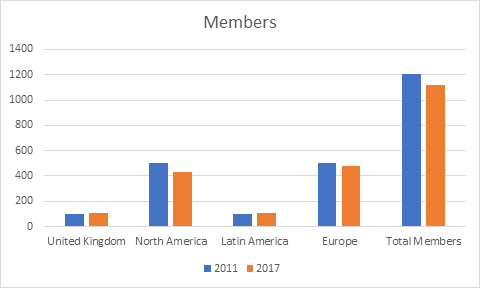
Die Mitgliedschaft in der AAPB steht Fachleuten offen, die sich für die Erforschung und Anwendung angewandter Psychophysiologie und Biofeedback sowie für die wissenschaftliche und berufliche Weiterentwicklung dieses Fachgebiets interessieren. Die AAPB ist auf über 2.000 Mitglieder angewachsen, die die Bereiche Psychologie , Medizin , Pflege , Sozialarbeit , Beratung , Physiotherapie , Pädagogik und andere Bereiche des Gesundheitswesens repräsentieren . Unternehmen können die AAPB durch ihre Firmenmitgliedschaft unterstützen. Es gibt zahlreiche Landesverbände, und der Verband hat Mitglieder in mehreren Ländern. [ 6 ]
Struktur
Zu den Vorteilen einer Mitgliedschaft gehören Ermäßigungen auf die Anmeldung zu Teleseminaren und Konferenzen sowie auf Buchkäufe. Außerdem erhält man Zugang zu Mailinglisten, Möglichkeiten zur Veröffentlichung im Web und zum Mitgliederbereich der AAPB-Website. Weiterhin profitiert man von der Online- und Printausgabe der Zeitschriften „Biofeedback“ und „Applied Psychophysiology and Biofeedback“ sowie von einer Gruppenkrankenversicherung über Chalice MD und vielem mehr. [ 7 ]
Geschichte
Die Biofeedback Research Society (BRS) wurde 1969 gegründet. Die BRS wurde 1976 in Biofeedback Society of America (BSA) und 1989 in Association for Applied Psychophysiology and Biofeedback (AAPB) umbenannt. [ 8 ]
Geschäftsführer
1969 bis 2009 – Francine Butler, PhD, CAE, CMP; 2007 bis 2010 – David L. Stumph, IOM, CAE; 2011 bis 2022 – Michelle Cunningham; 2022 bis heute – Leslie Shivers, CAE
Ehemalige Präsidenten
2024-25 - Inna Khazan 2022-23 - Fredric Shaffer 2019-21 - Ethan Benore 2018 - Patrick Steffen 2017 - Gabriel Sella 2016 - Thomas Collura 2015 - Richard Harvey 2014 - Stuart Donaldson 2013 - Richard Sherman 2012 - Jeffrey Bolek 2011 - Gabriel Tan 2010 - Carmen Russoniello 2009 - John Arena 2008 - Aubrey Ewing 2007 - Alan Glaros 2006 - Richard Gevirtz 2005 - Richard Sherman 2004 - Steve Baskin 2003 - Lynda Kirk 2002 - Paul Lehrer 2001 - Donald Moss 2000 - Doil Montgomery 1999 - Dale Walters 1998 - Ian Wickramasekera 1997 - Sebastian Striefel 1996 - Joel F. Lubar 1995 - Angele McGrady 1994 - Michael McKee 1993 - Frank Andrasik 1992 - Paula B. Amar 1991 - Steven L. Wolf 1990 - J. Peter Rosenfeld 1989 - Susan Middaugh 1988 - M. Barry Sterman 1987 - Mark Schwartz 1986 - Carol Schneider 1985 - Patricia Norris 1984 - Neal Miller 1983 - John D. Rugh 1982 - Steven L. Fahrion 1981 - Bernard T. Engel 1980 - Edward Taub 1979 - John Basmajian 1978 - Elmer Green 1977 - Charles Stroebel 1976 - Erik Peper 1975 - Joe Kamiya 1974 - Thomas H. Budzynski 1973 - Gary Schwartz 1971 to 1972 - Johann Stoyva 1970 to 1971 - Thomas Mulholland 1969 to 1970 - Barbara Brown,[9]
AAPB Foundation
The AAPB Foundation was formed in 1985 at the urging of then AAPB president, Neal Miller. Miller believed that the organization should encourage the interest and application of work by students to demonstrate the efficacy of biofeedback techniques. Presently, the foundation annually supports travel scholarships to students whose papers have been accepted for presentation at the annual meeting.
The Foundation for Education and Research in Biofeedback and Related Sciences initiated a program aimed at stimulating biofeedback research at its 2009 Board meeting. The board established funding for three grants at $1,000 each. Eligibility is limited to graduate students doing research in biofeedback and related fields. The award is accompanied by a travel scholarship and a waiver of registration to attend the AAPB annual meeting where the results of the research are presented.[10]
References
- ^ a b „Was ist Biofeedback?“ . Association for Applied Psychophysiology and Biofeedback. 18.05.2008 . Abgerufen am 22.02.2010 .
- ^ Neblett, R., Shaffer, F., & Crawford, J. (2008). Welchen Wert hat die Zertifizierung des Biofeedback Certification Institute of America? Biofeedback, 36 (3), 92-94.
- ^ „Angewandte Psychophysiologie und Biofeedback“ . Verband für Angewandte Psychophysiologie und Biofeedback. 18.05.2008 . Abgerufen am 22.02.2010 .
- ^ „Biofeedback“ . Association for Applied Psychophysiology and Biofeedback. 19.11.2025 . Abgerufen am 19.11.2015 .
- ^ „Teleseminare“ . Verband für Angewandte Psychophysiologie und Biofeedback. 18.05.2008 . Abgerufen am 22.02.2010 .
- ^ „Mitgliedschaft“ . Association for Applied Psychophysiology and Biofeedback. 18.05.2008 . Abgerufen am 22.02.2010 .
- ^ . Association for Applied Psychophysiology and Biofeedback. 19.11.2025 https://www.aapb.org . Abgerufen am 19.11.2025 .
{{cite web}}Fehlend oder leer|title=( Hilfe ) - Schwartz , M. S. & Olson, R. Paul (2003). Eine historische Perspektive auf das Gebiet des Biofeedbacks und der angewandten Psychophysiologie. In M. S. Schwartz & F. Andrasik (Hrsg.), Biofeedback: Ein Leitfaden für die Praxis (3. Aufl.). New York: The Guilford Press.
- ^ „Ehemalige Präsidenten“ . Verband für Angewandte Psychophysiologie und Biofeedback. 18.05.2008 . Abgerufen am 22.02.2010 .
- ^ „AAPB Foundation“ . Verband für Angewandte Psychophysiologie und Biofeedback. 18.05.2008 . Abgerufen am 22.02.2010 .