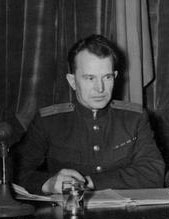
Francisco Xavier do Amaral (3. Dezember 1937 – 6. März 2012) war ein osttimoresischer Politiker. Als Mitbegründer der Frente Revolucionária de Timor Leste Independente ( Fretilin ) wurde Amaral als erster Präsident Osttimors vereidigt, nachdem das Land, damals eine portugiesische Kolonie , am 28. November 1975 einseitig seine Unabhängigkeit erklärt hatte. [ 1 ] Von 2001 bis zu seinem Tod im Jahr 2012 war er Mitglied des Nationalparlaments für die Sozialdemokratische Vereinigung Osttimors . [ 2 ] Amaral war unter den Osttimoresen auch als „Abo (Großvater) Xavier“ bekannt, eine liebevolle Bezeichnung . [ 1 ]
Biographie
Frühen Lebensjahren
Amaral gehörte der ethnischen Gruppe der Mambai an [ 3 ] und war ein Nachkomme von Königen, die das Gebiet des heutigen südlichen Distrikts Manufahi in Osttimor regierten. [ 1 ] Er heiratete 1974 Lucia Osorio Soares, doch die Ehe wurde bald geschieden. [ 4 ] Das Paar hatte keine Kinder [ 5 ] , und Amaral heiratete nie wieder. [ 6 ]
Präsident von Osttimor
Amaral gründete Anfang der 1970er Jahre die Sozialdemokratische Vereinigung Osttimoresiens . [ 1 ] Die Partei, die als Vorläuferin der Fretilin gilt , setzte sich für die Unabhängigkeit von Portugal ein. [ 1 ]
Amaral wurde am 28. November 1975 als erster Präsident des Landes vereidigt, nachdem die Demokratische Republik Osttimor ihre Unabhängigkeit von Portugal erklärt hatte . [ 1 ] Seine Amtszeit dauerte nur zehn Tage, bevor er am 7. Dezember 1975 aufgrund der indonesischen Invasion mit der Fretilin ins gebirgige Landesinnere fliehen musste. [ 1 ] Obwohl die meisten Regierungen der Welt die Unabhängigkeit Osttimors und Amarals Autorität während seiner zehntägigen Herrschaft 1975 nicht anerkannten, betrachteten die Osttimoresen Amaral laut Damien Kingsbury , Politikwissenschaftler an der Deakin University und führender Osttimor-Experte, als ersten Präsidenten des Landes. [ 1 ]
Gefängnis und Exil
Amaral wurde 1977 aufgrund von Meinungsverschiedenheiten über die Strategie im Kampf gegen die indonesische Besatzung aus der Fretilin ausgeschlossen und von deren marxistischer Fraktion inhaftiert . [ 1 ] Die Fretilin-Fraktion hielt ihn während ihrer Kämpfe gegen die indonesischen Streitkräfte häufig fest und verlegte ihn. Im August 1978 wurde er bei einem Hinterhalt seiner Fretilin-Gefangenen im Stich gelassen und umgehend von der indonesischen Armee festgenommen . [ 1 ]
Von Ende der 1980er Jahre bis 1999 war Amaral Co-Vorsitzender der Indonesisch-Portugalen Freundschaftsgesellschaft (PPIP), einer Nichtregierungsorganisation, die in Jakarta gegründet wurde, um einen Dialog mit portugiesischen Gemeindevorstehern aufzunehmen und so eine unpolitische, von der Bevölkerung selbst initiierte Lösung für Osttimor zu finden.
The Indonesian government used Amaral as a propaganda tool to divide the East Timorese independence movement following his capture.[1] He was exiled to Bali, where he was forced to work as a house servant for General Dading Kalbuadi, a leader of the Indonesian invasion of East Timor.[1] He was moved to Jakarta in 1983, where he befriended another Timorese exiled prisoner, Xanana Gusmão.[1] Amaral and Gusmão became close friends during their imprisonment in Jakarta.[1]
Amaral attempted to negotiate several peace agreements with the Indonesian government while in exile in Jakarta.[1] His negotiations with Indonesia proved highly controversial with other East Timorese separatists.[1] He was released from General Kalbuadi's house in Jakarta, but lived in poverty for the remainder of his exile.[1] Amaral remained in Jakarta from 1983 until Indonesia's withdrawal from East Timor in 1999.
Return to East Timor (2000–2012)
Amaral relaunched his Timorese Social Democratic Association once he returned from exile.[1] He was a candidate for President of East Timor in three presidential elections in 2002, 2007, and 2012.[1]
In late 2001, his Timorese Social Democratic Association nominated him as a presidential candidate in the first post-occupation election, held in April 2002.[1] His opponent in the 2002 election was his friend, Xanana Gusmão.[1] Amaral publicly stated that he expected to lose to Gusmão, but believed that East Timor's young democracy deserved to have a real competition in the race.[1] Gusmão won the election in a landslide.[1]
Amaral ran for president for a second time in the April 2007 presidential election,[7] taking fourth place with 14.39% of the vote in the first round.[1][8] Another of Amaral's friends, Jose Ramos Horta, won the second round and was elected president.[1]
Amaral received a cancer diagnosis in 2011. Amaral was one of thirteen candidates nominated for the 2012 presidential election, which was held on 17 March 2012.[1] However, Amaral proved too seriously ill to appear at the official launch of the presidential campaign on 29 February 2012, which jeopardised his candidacy and the election.[1] The National Parliament of East Timor met in a plenary session in early March 2012, specifically to amend the presidential election law so that Amaral's absence from the launch would not negate the entire election.[1]
Francisco Xavier do Amaral died of cancer[5] at Guido Valadares National Hospital in Dili at 8:44 a.m. on 6 March 2012, at the age of 74.[1] Following a three day period of national mourning,[9][10] he was given a state funeral and buried at the Metinaro Heroes Cemetery in Dili.[1][11]
Legacy

On 20 May 2017, for the 15th anniversary of the restoration of East Timor's independence, a statue of Francisco Amaral was inaugurated in Dili, at the roundabout near the Convention Center.[12]
Notes
- ^Although the first President of East Timor, its head of state and/or government prior to Amaral's ascension was Mário Lemos Pires as Colonial Governor of Portuguese Timor.
References
- ^ abcdefghijklmnopqrstuvwxyzaaabacadAlford, Peter (7 March 2012). "Resistance-era president of East Timor, Francisco Xavier do Amaral, dies in Dili, aged 74". The Australian. Archived from the original on 8 March 2012. Retrieved 6 March 2020.
- ^Dareini, Ali (17 April 2002). "East Timor founding father Francisco Xavier do Amaral dies". Herald Sun. Retrieved 6 March 2012.
- ^Asian survey, University of California Press, 2003, Volume 43, Issues 4–6, p. 754
- ^ Goldstone, Anthony (8. März 2012). „Nachruf auf Francisco Xavier do Amaral“ . The Guardian . ISSN 0261-3077 . Abgerufen am 30. Juni 2025 .
- ^ a b "Francisco Xavier do Amaral" . The Times . 3. April 2012. Abgerufen am 30. Juni 2025 .
- ^ Kingsbury, Damien (14. März 2012). „Ein charismatischer Revolutionär“ . The Sydney Morning Herald . Abgerufen am 30. Juni 2025 .
- ^ „Timoresen bereiten sich auf die Wahl eines neuen Präsidenten vor“ , Australian Associated Press ( The Sydney Morning Herald ), 10. März 2007.
- ^ Ergebnisse der Präsidentschaftswahl 2007. Archiviert am 16. Februar 2008 in der Wayback Machine auf der Website der Wahlkommission Osttimors.
- ^ „República Democrática de Timor-Leste Decretos do Governo 2/2012: Luto Nacional pelo Senhor Francisco Xavier do Amaral“ [Regierungserlass 2/2012 der Demokratischen Republik Timor-Leste: Nationale Trauer um Francisco Xavier do Amaral]. Jornal da República (auf Portugiesisch). 6. März 2012 . Abgerufen am 7. April 2023 .
- ^ „Regierungsdekret ordnet Staatstrauer für den Tod von Francisco Xavier do Amaral an“ . Regierung von Timor-Leste . 6. März 2012. Abgerufen am 7. April 2023 .
- ^ McKittrick, David (14. März 2012). „Francisco Xavier do Amaral: Politiker, der maßgeblich am Kampf um die Befreiung Osttimors beteiligt war“ . The Independent . London.
- ^ „Statue von Francisco Xavier do Amaral in Dili eingeweiht“ . timor-leste.gov.tl . Regierung von Timor-Leste.
Weiterführende Literatur
- Goldstone, Anthony (8. März 2012). „Nachruf auf Francisco Xavier do Amaral“ . The Guardian . Abgerufen am 7. April 2023 .
- Gunter, Janet (6. März 2012). „Osttimor: Nation verliert einen geschätzten politischen Ältesten“ . Global Voices . Abgerufen am 7. April 2023 .
- Kingsbury, Damien (14. März 2012). „Ein charismatischer Revolutionär“ . The Sydney Morning Herald . Abgerufen am 7. April 2023 .
- Nicol, Bill (2002). "Chapter Eleven: Strange Bedfellows". Timor: A Nation Reborn. Jakarta: Equinox Publishing. pp. 106–120. ISBN 979958986X.
- Niner, Sara (2000). "A Long Journey of Resistance: The Origins and Struggle of the CNRT". Bulletin of Concerned Asian Scholars. 32 (1 and 2): 11–18. doi:10.1080/14672715.2000.10415775. ISSN 0007-4810.
- Nygaard-Christensen, Maj (1 September 2012). "Timor-Leste's Proclaimer of Independence". Critical Asian Studies. 44 (3): 493–498. doi:10.1080/14672715.2012.711983. ISSN 1467-2715.
- Santoso, Aboeprijadi (8 March 2012). "Presiden Sepuluh Hari" [Ten Day President]. Historia (in Indonesian). Retrieved 8 April 2023.
- ————————— (12 March 2012). "Obituary: Xavier do Amaral: Forgotten founder of an independent Timor Leste". The Jakarta Post. Retrieved 7 April 2023.
- ————————— (2012). "Xavier do Amaral – Forgotten Founder of Independent Timor Leste". Academia.edu. Retrieved 8 April 2023.
- "Francisco Xavier do Amaral". The Times. 3 April 2012. Retrieved 7 April 2023.