Wirbeltiere ( / ˈ v ɜːr t ə b r ɪ t , - ˌ b r eɪ t / ), [ 3 ] auch Craniaten genannt , sind Tiere mit einer Wirbelsäule und einem Schädel . Die Wirbelsäule umschließt und schützt das Rückenmark , während der Schädel das Gehirn schützt .
Die Wirbeltiere bilden den Unterstamm Vertebrata ( / ˌ v ɜːr t ə ˈ b r eɪ t ə / VUR -tə- BRAY -tə ) mit etwa 65.000 Arten und sind damit die mit Abstand größte ranghohe Gruppe innerhalb des Stammes der Chordatiere . Zu den Wirbeltieren gehören Säugetiere , Vögel , Amphibien sowie verschiedene Klassen von Fischen und Reptilien . Die Fische umfassen die kieferlosen Agnatha und die Kiefermäuler Gnathostomata . Zu den Kiefermäulern zählen sowohl Knorpelfische als auch Knochenfische . Zu den Knochenfischen gehören die Fleischflosser , von denen die Tetrapoden , die Vierfüßer, abstammen . Trotz ihres Erfolgs machen die Wirbeltiere immer noch weniger als fünf Prozent aller beschriebenen Tierarten aus .
Die ersten Wirbeltiere entstanden während der Kambrischen Explosion vor etwa 518 Millionen Jahren. Kiefertragende Wirbeltiere entwickelten sich im Ordovizium oder Silur ; Knochenfische erschienen im Silur und diversifizierten sich im Devon stark . Die ersten Vierfüßer erschienen gegen Ende des Devons , und die ersten Amphibien besiedelten das Land im Karbon . Während der Trias erschienen Säugetiere und Dinosaurier , wobei letztere im Jura die Vorfahren der Vögel bildeten . Die heute lebenden Arten verteilen sich etwa gleichmäßig auf Fische aller Art und Vierfüßer . Die Populationen vieler Arten sind seit 1970 aufgrund von Landnutzungsänderungen , Übernutzung natürlicher Ressourcen , Klimawandel , Umweltverschmutzung und dem Einfluss invasiver Arten stark zurückgegangen .
Eigenschaften
Besondere Merkmale
Wirbeltiere gehören zu den Chordaten , einem Stamm , der durch fünf Synapomorphien (einzigartige Merkmale) charakterisiert ist: nämlich eine Chorda dorsalis , ein hohles Nervenrohr entlang des Rückens , ein postanaler Schwanz, ein Endostyl (oft als Schilddrüse ausgeführt ) und paarig angeordnete Kiemen . Wirbeltiere teilen diese Merkmale mit anderen Chordaten. [ 4 ]
Wirbeltiere unterscheiden sich von allen anderen Tieren, einschließlich der anderen Chordatiere, durch zahlreiche Synapomorphien, nämlich: eine Wirbelsäule; einen Schädel aus Knochen oder Knorpel; ein großes Gehirn, das in drei oder mehr Abschnitte unterteilt ist; ein muskulöses Herz mit mehreren Kammern; ein Innenohr mit Bogengängen ; Sinnesorgane wie Augen, Ohren und Nase; und Verdauungsorgane wie Darm, Leber, Bauchspeicheldrüse und Magen. [ 5 ]
Physisch

Vertebrates (and other chordates) belong to the Bilateria, a group of animals with mirror symmetrical bodies.[6] They move, typically by swimming, using muscles along the back, supported by a strong but flexible skeletal structure, the spine or vertebral column.[7] The name 'vertebrate' derives from the Latinvertebratus, 'jointed',[8] from vertebra, 'joint', in turn from Latin vertere, 'to turn'.[9]

As embryos, vertebrates still have a notochord. In all but the jawless fishes, it is replaced with a vertebral column (made of bone or cartilage) during development.[7] Vertebrate embryos have pharyngeal arches; in adult fish, these support the gills, while in adult tetrapods they develop into other structures.[10][11]
In the embryo, a layer of cells along the back folds and fuses into a hollow neural tube.[12] This develops into the spinal cord, and at its front end, the brain.[12] The brain receives information about the world through nerves which carry signals from sense organs in the skin and body.[13] Because the ancestors of vertebrates usually moved forwards, the front of the body encountered stimuli before the rest of the body, favouring cephalisation, the evolution of a head containing sense organs and a brain to process the sensory information.[14]
Vertebrates have a tubular gut that extends from the mouth to the anus. The vertebral column typically continues beyond the anus to form an elongated tail.[15][16][17]

The ancestral vertebrates, and most extant species, are aquatic and carry out gas exchange in their gills. The gills are finely-branched structures which bring the blood close to the water. They are positioned just behind the head, supported by cartilaginous or bony branchial arches.[18] In jawed vertebrates, the first gill arch pair evolved into the jaws.[19] In amphibians and some primitive bony fishes, the larvae have external gills, branching off from the gill arches.[20]Oxygen is carried from the gills to the body in the blood, and carbon dioxide is returned to the gills, in a closed circulatory system driven by a chambered heart.[21] The tetrapods have lost the gills of their fish ancestors; they have adapted the swim bladder (that fish use for buoyancy) into lungs to breathe air, and the circulatory system is adapted accordingly.[22] At the same time, they adapted the bony fins of the lobe-finned fishes into two pairs of walking legs, carrying the weight of the body via the shoulder and pelvic girdles.[22]
Vertebrates vary in size from the smallest frog species such as Brachycephalus pulex, with a minimum adult snout–vent length of 6.45 millimetres (0.254 in)[23] to the blue whale, at up to 33 m (108 ft) and weighing some 150 tonnes.[24]
Molecular
Molecular markers known as conserved signature indels in protein sequences have been identified and provide distinguishing criteria for the vertebrate subphylum.[25] Five molecular markers are exclusively shared by all vertebrates and reliably distinguish them from all other animals; these include protein synthesis elongation factor-2, eukaryotic translation initiation factor 3, adenosine kinase and a protein related to ubiquitin carboxyl-terminal hydrolase).[25] A specific relationship between vertebrates and tunicates is supported by two molecular markers, the proteins Rrp44 (associated with the exosome complex) and serine C-palmitoyltransferase. These are exclusively shared by species from these two subphyla, but not by cephalochordates.[25]
Evolutionary history
Cambrian explosion

Vertebrates originated during the Cambrian explosion at the start of the Paleozoic, which saw a rise in animal diversity. The earliest known vertebrates belong to the Chengjiang biota[27] and lived about 518 million years ago.[1] These include Haikouichthys, Myllokunmingia,[27]Zhongjianichthys,[26] and probably Yunnanozoon.[28] Unlike other Cambrian animals, these groups had the basic vertebrate body plan: a notochord, rudimentary vertebrae, and a well-defined head and tail, but lacked jaws.[29] As such, one perspective is that Haikouichthys and other Myllokunmingiidae probably represent basal stem group craniates rather than actual vertebrates.[30]
Eine Wirbeltiergruppe mit unklarer Phylogenie, die kleinen, aalartigen Conodonten , ist durch Mikrofossilien ihrer paarigen Zahnsegmente aus dem späten Kambrium bis zum Ende der Trias bekannt. [ 31 ] Zoologen haben darüber diskutiert, ob die Zähne aufgrund der harten Zähne der Weichkörper-Conodonten zuerst mineralisiert wurden und anschließend die Knochen, oder umgekehrt. Es scheint jedoch, dass das mineralisierte Skelett zuerst entstand. [ 32 ]
Paläozoikum

Die ersten Kieferwirbeltiere traten möglicherweise im späten Ordovizium (vor etwa 445 Millionen Jahren) oder im Silur auf und wurden im Devon , dem sogenannten „Zeitalter der Fische“, weit verbreitet. [34] Knochenfische erschienen im Silur und wurden im Devon häufig. [ 35 ] In der Mitte des Devons nutzte eine Linie von Knochenfischen, die Sarcopterygii , mit Kiemen und Lungen, die an das Leben in sumpfigen Tümpeln angepasst waren, ihre muskulösen, paarigen Flossen, um sich an Land fortzubewegen. [ 36 ] Die Flossen, die bereits Knochen und Gelenke besaßen, entwickelten sich im Famennium des Devons zu den zwei Beinpaaren der ersten Tetrapoden [ 37 ] . [ 38 ] Diese Tetrapoden etablierten sich im darauffolgenden Karbon als Amphibien an Land . [ 39 ] Eine Gruppe von Wirbeltieren, die Amnioten , deren Embryo von Membranen umgeben ist , die ihm das Überleben an Land ermöglichen, spaltete sich im Karbon von amphibischen Tetrapoden ab. [ 40 ]
Mesozoikum: Zeitalter der Dinosaurier

At the onset of the Mesozoic, all larger vertebrate groups were devastated after the largest mass extinction in earth history. The following recovery phase saw the emergence of many new vertebrate groups that are still around today, and this time has been described as the origin of modern ecosystems. On the continents, the ancestors of modern lissamphibians, turtles, crocodilians, lizards, and mammals appeared, as well as dinosaurs, which gave rise to birds later in the Mesozoic. In the seas, various groups of marine reptiles evolved, as did new groups of fish.[40] At the end of the Mesozoic, another extinction event extirpated dinosaurs (other than birds) and many other vertebrate groups.[41]
Cenozoic: Age of Mammals

The Cenozoic, the current era, is sometimes called the "Age of Mammals", because of the dominance of the terrestrial environment by that group. Placental mammals have predominantly occupied the Northern Hemisphere, with marsupial mammals in the Southern Hemisphere.[42][43]
Approaches to classification
Taxonomic history
Vertebrata

In 1801, Jean-Baptiste Lamarck defined the vertebrates as a taxonomic group,[2] a phylum distinct from the invertebrates he was studying.[44] He described them as consisting of four classes, namely fish, reptiles, birds, and mammals,[45] but treated the cephalochordates and tunicates as molluscs.[44] In 1866, Ernst Haeckel called both his Craniata (vertebrates) and his Acrania (cephalochordates) Vertebrata.[44] In 1877, Ray Lankester grouped the craniates, cephalochordates, and urochordates (tunicates) as Vertebrata.[44] In 1880–1881, Francis Maitland Balfour placed the Vertebrata as a subphylum within the chordates.[44] In 2018, Naoki Irie and colleagues proposed making Vertebrata a full phylum.[44]
Cyclostomata und Craniaten
1758 klassifizierte Linnaeus Schleimaale als Vermes , nicht als Wirbeltiere. [ 46 ] 1806 fasste André Marie Constant Duméril Schleimaale und Neunaugen im Taxon Cyclostomi zusammen, das sich durch hornartige Zähne auf einem zungenartigen Apparat, eine große Chorda dorsalis im Erwachsenenalter und beutelförmige Kiemen (Marsupibranchii) auszeichnete. Die Cyclostomata wurden entweder als degenerierte Knorpelfische oder als primitive Wirbeltiere angesehen. [ 47 ] 1889 prägte Edward Drinker Cope den Namen Agnatha („Kieferlose“) für eine Gruppe, die die Cyclostomata und fossile Gruppen ohne Kiefer umfasste. [ 47 ] Die Wirbeltiere wurden später in zwei große Schwestergruppen unterteilt: die Agnatha und die Gnathostomata (Kieferwirbeltiere). 1927 vermutete Erik Stensiö , dass die beiden Gruppen der lebenden Kieferlosen (d. h. die Rundmäuler) unabhängig voneinander aus fossilen Kieferlosen entstanden sind. [ 47 ] 1977 argumentierte Søren Løvtrup , dass Neunaugen enger mit den Kiefermäulern verwandt seien, basierend auf Merkmalen wie Radialmuskeln in den Flossen, echten Lymphozyten, Neuromasten im Innenohr und einem Kleinhirn. Dies implizierte, dass Wirbeltiere (Vertebrata) und Kiefermäuler (Craniata) unterschiedliche Taxa darstellten. [ 47 ] Die Gültigkeit des Taxons „Craniata“ wurde 2002 von Delarbre et al. mittels mtDNA- Sequenzierung untersucht. Sie kamen zu dem Schluss, dass Myxini enger mit Hyperoartia als mit den Kiefermäulern verwandt sind – d. h., dass die modernen kieferlosen Fische eine Klade namens Rundmäuler (Cyclostomata) bilden . Dies impliziert, dass Vertebrata wieder in seine ursprüngliche Zusammensetzung ( Gnathostomata + Cyclostomata ) zurückgeführt werden sollte und der Name Craniata ein jüngeres Synonym von Vertebrata ist. [ 48 ] Im Jahr 2010 wurde die Debatte beigelegt, als der französische Paläontologe Philippe Janvier erklärte, er akzeptiere die Monophylie von Vertebraten und Cyclostomata gleichermaßen und dass „die Intuitionen der Zoologen des 19. Jahrhunderts richtig waren, die annahmen, dass [Cyclostomata] (insbesondere Schleimaale) stark degeneriert sind und im Laufe der Zeit viele Merkmale verloren haben.“ [ 49 ]
Traditionelle Taxonomie

Die konventionelle evolutionäre Taxonomie teilt die heute lebenden Wirbeltiere anhand traditioneller Interpretationen grober anatomischer und physiologischer Merkmale in sieben Klassen ein. Die gängige Klassifikation listet drei Klassen von Fischen und vier von Tetrapoden auf . [ 50 ] Dabei werden einige natürliche Verwandtschaftsverhältnisse zwischen den Gruppen außer Acht gelassen. Beispielsweise stammen die Vögel von einer Gruppe der Reptilien ab, daher ist die Gruppe „ Reptilia “ ohne die Vögel (Aves) keine natürliche Gruppierung ; sie wird als paraphyletisch bezeichnet und in Anführungszeichen gesetzt. [ 51 ] [ 52 ]
- Unterstamm Wirbeltiere
- Klasse " Agnatha " (kieferlose Fische)
- Klasse Chondrichthyes (Knorpelfische)
- Klasse " Osteichthyes " (Knochenfische)
- Klasse " Amphibia " (traditionelle Amphibien)
- Klasse " Reptilien " (Reptilien)
- Klasse Aves (Vögel)
- Klasse Mammalia (Säugetiere)
Darüber hinaus gibt es zwei Klassen ausgestorbener Panzerfische, Placodermi und Acanthodii .
Es wurden weitere Klassifizierungsmethoden für die Wirbeltiere entwickelt, insbesondere mit Schwerpunkt auf der Phylogenie früher Amphibien und Reptilien. Ein Beispiel, basierend auf einer Arbeit von MJ Benton aus dem Jahr 2004 [ 53 ], wird hier gegeben († = ausgestorben , "" = paraphyletisch):
- Unterstamm Wirbeltiere
- Infraphylum " Agnatha " ( Neunaugen und andere kieferlose Fische)
- Überklasse † Anaspidomorphi (Anaspiden und Verwandte)
- Klasse † Anaspida (Anaspiden)
- Überklasse Cyclostomata (Cyclostomata)
- Klasse Myxini (Schleimaale)
- Klasse Petromyzontida (Neunaugen)
- Klasse † Cephalaspidomorphi (Cephalaspidomorphen)
- Klasse † Conodonta (Conodonten)
- Klasse † Pteraspidomorpha (Pteraspidomorpha)
- Klasse † Thelodonti (Thelodonten)
- Überklasse † Anaspidomorphi (Anaspiden und Verwandte)
- Infraphylum Gnathostomata (Wirbeltiere mit Kiefern)
- Klasse † " Placodermi " (Panzerfische)
- Klasse Chondrichthyes (Knorpelfische)
- Klasse † " Acanthodii " (stachelige 'Haie')
- " Osteichthyes " (Knochenfische)
- Klasse Actinopterygii (Strahlenflosser)
- " Sarcopterygii " (Fleischflosser, zu denen kladistisch die Tetrapoden gehören )
- Überklasse Tetrapoda (vierbeinige Wirbeltiere)
- Klasse " Amphibia " (Amphibien, Lissamphibia )
- Klasse Synapsida ( Säugetiere und ihre ausgestorbenen Verwandten)
- Klasse Sauropsida (moderne Reptilien und Vögel )
- Überklasse Tetrapoda (vierbeinige Wirbeltiere)
- Incertae sedis
- Gattung † Nuucichthys
- Gattung † Palaeospondylus
- Infraphylum " Agnatha " ( Neunaugen und andere kieferlose Fische)
Obwohl diese traditionelle Taxonomie geordnet ist, sind die meisten Gruppen paraphyletisch, was bedeutet, dass die Struktur die natürliche, evolutionär bedingte Gruppierung nicht genau widerspiegelt. [ 53 ] So gehören beispielsweise zu den Nachkommen der ersten Reptilien die heutigen Reptilien, Säugetiere und Vögel; die Kieferlosen brachten die Kiefermäuler hervor; die Knochenfische die Landwirbeltiere ; eine Gruppe von Amphibien, die Labyrinthodonten , brachte die Reptilien hervor (traditionell einschließlich der säugetierähnlichen Synapsiden), welche wiederum die Säugetiere und Vögel hervorbrachten. Die meisten Wissenschaftler, die mit Wirbeltieren arbeiten, verwenden eine rein phylogenetische Klassifikation, die sich an ihrer bekannten Evolutionsgeschichte orientiert. [ 44 ]
Äußere Phylogenie
Die Frage nach den nächsten Verwandten der Wirbeltiere ist seit Jahren Gegenstand von Debatten. Früher ging man davon aus, dass die Cephalochordata die Schwestergruppe der Vertebrata seien. Diese Gruppe, die Notochordata, galt als Schwestergruppe der Tunicata . [ 54 ] Seit 2006 zeigen Analysen jedoch, dass die Manteltiere und Wirbeltiere einen gemeinsamen Taxon, die Olfactores, bilden, mit den Cephalochordata als Schwestergruppe (die Olfactores-Hypothese ), wie im folgenden phylogenetischen Baum dargestellt . [ 55 ] [ 56 ] [ 25 ]
| Chordata |
| ||||||||||||


Interne Phylogenie
Die interne Phylogenie der rezenten Wirbeltiere ist im Baum dargestellt. [ 57 ]
| Wirbeltiere |
| |||||||||||||||||||||||||||
| (backbone) |






The placement of hagfishes within the vertebrates has been controversial. Their lack of proper vertebrae (among other characteristics of jawless lampreys and jawed vertebrates) led authors of phylogenetic analyses based on morphology to place them outside Vertebrata.[58]Molecular data however indicates that they are vertebrates, being most closely related to lampreys.[59][60] An older view is that they are a sister group of vertebrates in the common taxon of Craniata.[61] In 2019, Tetsuto Miyashita and colleagues reconciled the two types of analysis, supporting the Cyclostomata hypothesis using only morphological data.[62]
A wider issue is the position of fossil agnathans, such as the Myllokunmingiida. Tetsuto Miyashita and colleagues in 2019 place them tentatively as part of the Vertebrata total group, outside the Vertebrata crown group that led to all extant vertebrates. These fossils have a cranium (a skull of bone or cartilage) but at most a rudimentary vertebral column, so they can be viewed as part of a craniate clade that also includes the crown group vertebrates which possess a full vertebral column.[63]
| Vertebrata$ |
| ||||||||||||||||||||||||||||||||||||
| (total group) |


- $Equivalent to Craniata.
Diversity
Species by group
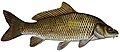
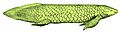
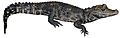
Described and extant vertebrate species are split roughly evenly but non-phylogenetically between non-tetrapod "fish" and tetrapods. The following table lists the number of described extant species for each vertebrate class as estimated in the IUCN Red List of Threatened Species, 2014.3.[64] Paraphyletic groups are shown in quotation marks.
| Vertebrate groups | Image | Class | Estimated number ofdescribed species[64][65] | Grouptotals[64] | ||
|---|---|---|---|---|---|---|
| Anamniotelackamnioticmembraneso need toreproducein water | Jawless | "Fish" |  | Myxini(hagfish) | 78 | >32,900 |
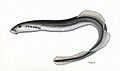 | Hyperoartia(lampreys) | 40 | ||||
| Jawed | 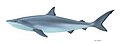 | Chondrichthyes | >1,100 | |||
 | Actinopterygii | >32,000 | ||||
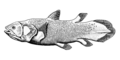 | "Sarcopterygii" | 8 | ||||
| Tetrapods | 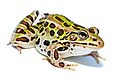 | Amphibia | 7,302 | 33,278 | ||
| Amniotehaveamnioticmembraneadapted toreproducingon land | 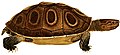 | "Reptilia" | 10,711 | |||
 | Mammalia | 5,513 | ||||
 | Aves (birds) | 10,425 | ||||
| Total described species | 66,178 | |||||
The IUCN estimates that 1,305,075 extant invertebrate species have been described,[64] which means that less than 5% of the described animal species in the world are vertebrates.[66]
Recent population trends
The Living Planet Index, following 16,704 populations of 4,005 species of vertebrates, shows a decline of 60% between 1970 and 2014.[67] Since 1970, freshwater species declined 83%, and tropical populations in South and Central America declined 89%.[68] The authors note that "An average trend in population change is not an average of total numbers of animals lost."[68] According to WWF, this could lead to a sixth major extinction event.[69] The five main causes of biodiversity loss are land-use change, overexploitation of natural resources, climate change, pollution and invasive species.[70]
Notes
- ^Agnatha as traditionally defined is paraphyletic, that is, a taxon including all jawless fishes, but if one only includes living species then the group becomes monophyletic and equivalent to Cyclostomi.
See also
- Marine vertebrate – Marine animals with a vertebrate column
- Taxonomy of the vertebrates (Young, 1962) – 1962 classification system
References
- ^ abYang, Chuan; Li, Xian-Hua; Zhu, Maoyan; Condon, Daniel J.; Chen, Junyuan (2018). "Geochronological constraint on the Cambrian Chengjiang biota, South China"(PDF). Journal of the Geological Society. 175 (4): 659–666. Bibcode:2018JGSoc.175..659Y. doi:10.1144/jgs2017-103. S2CID 135091168. Archived(PDF) from the original on 9 October 2022.
- ^ abcNielsen, C. (July 2012). "The authorship of higher chordate taxa". Zoologica Scripta. 41 (4): 435–436. doi:10.1111/j.1463-6409.2012.00536.x. S2CID 83266247.
- ^"vertebrate". Dictionary.com Unabridged (Online). n.d.
- ^Freeborn, Michelle (2015). Roberts, Clive Douglas; Stewart, Andrew L.; Struthers, Carl D. (eds.). The fishes of New Zealand. Vol. 2. Te Papa Press. p. 6. ISBN 978-0-9941041-6-8.
- ^Farina, Stacy (23 August 2018). "Vertebrate Phylogeny"(PDF). Howard University. Archived from the original(PDF) on 15 March 2025. Retrieved 7 December 2024.
- ^"Trends in evolution". University of California Museum of Paleontology. Retrieved 10 January 2019.
- ^ abRomer, Alfred S.; Parsons, Thomas S. (1977). The Vertebrate Body. Holt-Saunders. pp. 161–170. ISBN 0-03-910284-X.
- ^"vertebrate". Online Etymology Dictionary.
- ^"Definition of Vertebra". Merriam-Webster. 25 November 2024.
- ^Graham, A. (2003). "Development of the pharyngeal arches". American Journal of Medical Genetics Part A. 119A (3): 251–256. doi:10.1002/ajmg.a.10980. PMID 12784288. S2CID 28318053.
- ^Graham, A. (July 2001). "The development and evolution of the pharyngeal arches". Journal of Anatomy. 199 (Pt 1-2): 133–141. doi:10.1046/j.1469-7580.2001.19910133.x. PMC 1594982. PMID 11523815.
- ^ abMartín-Durán, José M.; Pang, Kevin; Børve, Aina; Lê, Henrike Semmler; Furu, Anlaug; et al. (4 January 2018). "Convergent evolution of bilaterian nerve cords". Nature. 553 (7686): 45–50. Bibcode:2018Natur.553...45M. doi:10.1038/nature25030. PMC 5756474. PMID 29236686.
- ^"In brief: How does the nervous system work?". InformedHealth.org. 4 May 2023. Retrieved 30 November 2024.
- ^Brusca, Richard C. (2016). "Introduction to the Bilateria and the Phylum Xenacoelomorpha: Triploblasty and Bilateral Symmetry Provide New Avenues for Animal Radiation". Invertebrates(PDF). Sinauer Associates. pp. 345–372. ISBN 978-1605353753.
- ^Handrigan, Gregory R. (2003). "Concordia discors: duality in the origin of the vertebrate tail". Journal of Anatomy. 202 (Pt 3): 255–267. doi:10.1046/j.1469-7580.2003.00163.x. PMC 1571085. PMID 12713266.
- ^Holland, Nicholas D.; Holland, Linda Z.; Holland, Peter W. H. (23 April 2015). "Scenarios for the making of vertebrates". Nature. 520 (7548): 450–455. Bibcode:2015Natur.520..450H. doi:10.1038/nature14433. PMID 25903626.
- ^Hejnol, Andreas; Martín-Durán, José M. (2015). "Getting to the bottom of anal evolution". Zoologischer Anzeiger - A Journal of Comparative Zoology. 256: 61–74. Bibcode:2015ZooAn.256...61H. doi:10.1016/j.jcz.2015.02.006. hdl:1956/10848.
- ^Scott, T. (1996). Concise encyclopedia biology. De Gruyter. p. 542. ISBN 978-3-11-010661-9.
- ^ Brazeau, Martin D.; Castiello, Marco; El Fassi El Fehri, Amin; Hamilton, Louis; Ivanov, Alexander O.; et al. (20. November 2023). „Fossile Beweise für einen pharyngealen Ursprung des Brustgürtels der Wirbeltiere“ . Natur . 623 (7987): 550–554 . Bibcode : 2023Natur.623..550B . doi : 10.1038/s41586-023-06702-4 . HDL : 10044/1/107350 . PMC 10651482 . PMID 37914937 .
- ^ Szarski, Henryk (1957). „Der Ursprung der Larve und die Metamorphose bei Amphibien“. The American Naturalist . 91 (860): 283–301 . Bibcode : 1957ANat...91..283S . doi : 10.1086/281990 . JSTOR 2458911. S2CID 85231736 .
- ^ Simões-Costa, Marcos S.; Vasconcelos, Michelle; Sampaio, Allysson C.; Cravo, Roberta M.; Linhares, Vania L.; et al. (2005). „Der evolutionäre Ursprung der Herzkammern“. Entwicklungsbiologie . 277 (1): 1– 15. doi : 10.1016/j.ydbio.2004.09.026 . PMID 15572135 .
- ^ a b Clack, JA (2002). „Von Flossen zu Füßen: Transformation und Übergang“. In: Gaining ground: the origin and evolution of tetrapods . Indiana University Press . S. 187–260 .
- ^ Bolaños, Wendy H.; Dias, Iuri Ribeiro; Solé, Mirco (7. Februar 2024). „ Amphibien im Detail: Welches ist das kleinste Wirbeltier der Welt?“ Zoologica Scripta . 53 (4): 414–418 . doi : 10.1111/zsc.12654 . S2CID 267599475 .
- ^ Chamary, JV (6. Juni 2024). „Wie groß können Tiere werden?“ . BBC Discover Wildlife . Abgerufen am 29. November 2024 .
- ^ abcdGupta, Radhey S. (January 2016). "Molecular signatures that are distinctive characteristics of the vertebrates and chordates and supporting a grouping of vertebrates with the tunicates". Molecular Phylogenetics and Evolution. 94 (Pt A): 383–391. Bibcode:2016MolPE..94..383G. doi:10.1016/j.ympev.2015.09.019. PMID 26419477.
- ^ abShu, D. (2003). "A paleontological perspective of vertebrate origin". Chinese Science Bulletin. 48 (8): 725–735. doi:10.1360/03wd0026 (inactive 1 July 2025).
{{cite journal}}: CS1 Wartung: DOI inaktiv ab Juli 2025 ( Link ) - ^ abShu, D-G.; Luo, H-L.; Conway Morris, S.; Zhang, X-L.; Hu, S-X.; et al. (1999). "Lower Cambrian vertebrates from south China". Nature. 402 (6757): 42–46. Bibcode:1999Natur.402...42S. doi:10.1038/46965. S2CID 4402854.
- ^Chen, J.-Y.; Huang, D.-Y.; Li, C.-W. (1999). "An early Cambrian craniate-like chordate". Nature. 402 (6761): 518–522. Bibcode:1999Natur.402..518C. doi:10.1038/990080. S2CID 24895681.
- ^Waggoner, B. "Vertebrates: Fossil Record". University of California Museum of Paleontology. Archived from the original on 29 June 2011. Retrieved 15 July 2011.
- ^Shu, D. G.; Conway Morris, S.; Han, J.; Zhang, Z. F.; Yasui, K.; et al. (2003). "Head and backbone of the Early Cambrian vertebrate Haikouichthys". Nature. 421 (6922): 526–529. Bibcode:2003Natur.421..526S. doi:10.1038/nature01264. PMID 12556891. S2CID 4401274.
- ^Donoghue, P. C. J.; Forey, P. L.; Aldridge, R. J. (May 2000). "Conodont affinity and chordate phylogeny". Biological Reviews. 75 (2): 191–251. doi:10.1111/j.1469-185X.1999.tb00045.x. PMID 10881388. S2CID 22803015.
- ^Murdock, Duncan J. E.; Dong, Xi-Ping; Repetski, John E.; Marone, Federica; Stampanoni, Marco; et al. (2013). "The origin of conodonts and of vertebrate mineralized skeletons". Nature. 502 (7472): 546–549. Bibcode:2013Natur.502..546M. doi:10.1038/nature12645. PMID 24132236.
- ^Benton, Michael J. (2019). "Acanthostega". Vertebrate Palaeontology (Kindle ed.). Wiley. p. 90.
- ^Encyclopædia Britannica. Vol. 17. Encyclopædia Britannica. 1954. p. 107.
- ^Berg, L. R.; Solomon, E. P.; Martin, D. W. (2004). Biology. Cengage Learning. p. 599. ISBN 978-0-534-49276-2.
- ^Carroll, Robert L. (1977). Hallam, Anthony (ed.). Patterns of Evolution, as Illustrated by the Fossil Record. Elsevier. pp. 405–420. ISBN 978-0-444-41142-6. Archived from the original on 14 April 2021. Retrieved 15 October 2020.
- ^Narkiewicz, Katarzyna; Narkiewicz, Marek (January 2015). "The age of the oldest tetrapod tracks from Zachełmie, Poland". Lethaia. 48 (1): 10–12. Bibcode:2015Letha..48...10N. doi:10.1111/let.12083.
- ^Long, John A.; Niedźwiedzki, Grzegorz; Garvey, Jillian; Clement, Alice M.; Camens, Aaron B.; Eury, Craig A.; Eason, John; Ahlberg, Per E. (May 2025). "Earliest amniote tracks recalibrate the timeline of tetrapod evolution". Nature. 641 (8065): 1193–1200. Bibcode:2025Natur.641.1193L. doi:10.1038/s41586-025-08884-5. PMC 12119326. PMID 40369062.
- ^Hall, Brian K. (15 September 2008). Fins into Limbs: Evolution, Development, and Transformation. University of Chicago Press. p. 209. ISBN 9780226313405. Archived from the original on 9 August 2020. Retrieved 25 April 2020.
- ^ abBenton, Michael (2014). Vertebrate Palaeontology (4th ed.). John Wiley & Sons. pp. 119, 148. ISBN 978-1-118-40764-6.
- ^Fortey, Richard (1999). Life: A Natural History of the First Four Billion Years of Life on Earth. Vintage Books. pp. 238–260. ISBN 978-0-375-70261-7.
- ^Pires, Mathias; Mankin, Brian; Silvestro, Daniele; Quental, Tiago (26 September 2018). "Diversification dynamics of mammalian clades during the K–Pg mass extinction". Biology Letters. 14 (9). doi:10.1098/rsbl.2018.0458. PMC 6170748. PMID 30258031.
- ^Lowery, Christopher; Fraass, Andrew (8 April 2019). "Morphospace expansion paces taxonomic diversification after end Cretaceous mass extinction". Nature Ecology & Evolution. 3 (6): 900–904. Bibcode:2019NatEE...3..900L. doi:10.1038/s41559-019-0835-0. hdl:1983/fb08c3c1-c203-4780-bc90-5994ec1030ff. PMID 30962557. S2CID 102354122 – via Nature.
- ^ abcdefgIrie, Naoki (26 December 2018). "The phylum Vertebrata: a case for zoological recognition". Zoological Letters. 4 Article Number 32 32. doi:10.1186/s40851-018-0114-y. PMC 6307173. PMID 30607258.
- ^Blitz, David. "Lamarck and Species Evolution". Central Connecticut State University. Retrieved 7 December 2024.
- ^Linnaeus, Carolus (1758). Systema Naturae (in Latin) (10 ed.).
- ^ abcdJanvier, Philippe. "Craniata - Animals with skulls". Tree of Life Web Project (ToL). Tree of Life Web Project.
- ^Delarbre, Christiane; Gallut, C.; Barriel, V.; Janvier, P.; Gachelin, G.; et al. (2002). "Complete Mitochondrial DNA of the Hagfish, Eptatretus burgeri: The Comparative Analysis of Mitochondrial DNA Sequences Strongly Supports the Cyclostome Monophyly". Molecular Phylogenetics and Evolution. 22 (2): 184–192. Bibcode:2002MolPE..22..184D. doi:10.1006/mpev.2001.1045. PMID 11820840.
- ^Janvier, Philippe (9 November 2010). "microRNAs revive old views about jawless vertebrate divergence and evolution". Proceedings of the National Academy of Sciences. 107 (45): 19137–19138. Bibcode:2010PNAS..10719137J. doi:10.1073/pnas.1014583107. PMC 2984170. PMID 21041649.
- ^Campbell, Neil A. (1997). Biology (4th ed.). Benjamin Cummings. p. 632. ISBN 978-0-8053-1940-8.
- ^Farris, James S. (1974). "Formal definitions of paraphyly and polyphyly". Systematic Zoology. 23 (4): 548–554. Bibcode:1974SysZ...23..548F. doi:10.2307/2412474. JSTOR 2412474.
- ^Rieppel, Olivier (2005). "Monophyly, paraphyly, and natural kinds". Biology and Philosophy. 20 (2–3): 465–487. doi:10.1007/s10539-004-0679-z.
Something had therefore to be done about the term 'Reptilia.' It could no longer be considered to designate a natural (monophyletic) group without including birds, but only to designate an artificial (non-monophyletic) group
- ^ abBenton, M.J. (1 November 2004). Vertebrate Palaeontology (Third ed.). Blackwell Publishing. p. 33. ISBN 978-0632056378. Archived from the original on 19 October 2008. Retrieved 16 March 2006.
- ^ Stach, Thomas (2008). „Chordatenphylogenie und -evolution: ein gar nicht so einfaches Drei-Taxon-Problem“ . Journal of Zoology . 276 (2): 117–141 . doi : 10.1111/j.1469-7998.2008.00497.x .
- ^ Delsuc, Frédéric; Brinkmann, Henner; Chourrout, Daniel; Philippe, Hervé (2006). „Manteltiere und nicht Cephalochordaten sind die nächsten lebenden Verwandten der Wirbeltiere“ ( PDF) . Nature . 439 (7079): 965–968 . Bibcode : 2006Natur.439..965D . doi : 10.1038/nature04336 . PMID 16495997. S2CID 4382758. Archiviert (PDF) vom Original am 9. Oktober 2022.
- Dunn , CW; Hejnol, A.; Matus, DQ; Pang, K.; Browne, WE; et al. (2008) . „Breite phylogenetische Stichproben verbessern die Auflösung des Tierbaums“. Nature . 452 (7188): 745–749 . Bibcode : 2008Natur.452..745D . doi : 10.1038/nature06614 . PMID 18322464. S2CID 4397099 .
- ^ „Zeit dem Stammbaum hinzufügen“ . Evolution verstehen . Museum für Paläontologie der Universität von Kalifornien . Abgerufen am 8. Dezember 2024 .
- ^ Ota, Kinya G.; Fujimoto, Satoko; Oisi, Yasuhiro; Kuratani, Shigeru (25. Januar 2017). „Identifizierung wirbelähnlicher Elemente und ihre mögliche Unterscheidung von Sklerotomen beim Schleimaal“ . Naturkommunikation . 2 373. Bibcode : 2011NatCo...2..373O . doi : 10.1038/ncomms1355 . PMC 3157150 . PMID 21712821 .
- ^ Kuraku; Hoshiyama, D.; Katoh, K.; Suga, H.; Miyata, T. (Dezember 1999). „Monophylie von Neunaugen und Hagfischen, unterstützt durch nukleare DNA-kodierte Gene“. Zeitschrift für molekulare Evolution . 49 (6): 729– 35. Bibcode : 1999JMolE..49..729K . doi : 10.1007/PL00006595 . PMID 10594174 . S2CID 5613153 .
- ^Stock, D.; Whitt, G. S. (7 August 1992). "Evidence from 18S ribosomal RNA sequences that lampreys and hagfish form a natural group". Science. 257 (5071): 787–789. Bibcode:1992Sci...257..787S. doi:10.1126/science.1496398. PMID 1496398.
- ^Nicholls, H. (10 September 2009). "Mouth to Mouth". Nature. 461 (7261): 164–166. doi:10.1038/461164a. PMID 19741680.
- ^Miyashita, Tetsuto; Coates, Michael I.; Farrar, Robert; Larson, Peter; Manning, Phillip L.; et al. (5 February 2019). "Hagfish from the Cretaceous Tethys Sea and a reconciliation of the morphological–molecular conflict in early vertebrate phylogeny". Proceedings of the National Academy of Sciences of the United States of America. 116 (6): 2146–2151. Bibcode:2019PNAS..116.2146M. doi:10.1073/pnas.1814794116. PMC 6369785. PMID 30670644.
- ^Miyashita, Tetsuto; Coates, Michael I.; Farrar, Robert; Larson, Peter; Manning, Phillip L.; et al. (5 February 2019). "Hagfish from the Cretaceous Tethys Sea and a reconciliation of the morphological–molecular conflict in early vertebrate phylogeny"(PDF). Proceedings of the National Academy of Sciences. 116 (6): 2146–2151. Bibcode:2019PNAS..116.2146M. doi:10.1073/pnas.1814794116. ISSN 0027-8424.
- ^ abcdThe World Conservation Union. 2014. IUCN Red List of Threatened Species, 2014.3. Summary Statistics for Globally Threatened Species. Table 1: Numbers of threatened species by major groups of organisms (1996–2014).
- ^Nelson, Joseph S. (2016). Fishes of the World. John Wiley & Sons. pp. 20, 23, 40, 102, 241. ISBN 978-1-118-34233-6.
- ^Zhang, Zhi-Qiang (30 August 2013). "Animal biodiversity: An update of classification and diversity in 2013. In: Zhang, Z.-Q. (Ed.) Animal Biodiversity: An Outline of Higher-level Classification and Survey of Taxonomic Richness (Addenda 2013)". Zootaxa. 3703 (1): 5. doi:10.11646/zootaxa.3703.1.3. Archived from the original on 24 April 2019. Retrieved 2 March 2018.
- ^"Living Planet Report 2018". wwf.panda.org. Retrieved 21 May 2020.
- ^ abGrooten, M.; Almond, R. E. A. (2018). Living Planet Report – 2018: Aiming Higher(PDF). World Wide Fund for Nature. ISBN 978-2-940529-90-2. Archived(PDF) from the original on 9 October 2022.
- ^"WWF Finds Human Activity Is Decimating Wildlife Populations". Time. Retrieved 21 May 2020.
- ^IPBES (25 November 2019). S. Diaz; J. Settele; E.S. Brondízio; H.T. Ngo; M. Guèze; et al. (eds.). Summary for policymakers of the global assessment report on biodiversity and ecosystem services. Bonn: IPBES Secretariat. pp. 1–56. doi:10.5281/zenodo.3553579.
Bibliography
- Kardong, Kenneth V. (1998). Vertebrates: Comparative Anatomy, Function, Evolution (second ed.). USA: McGraw-Hill. pp. 747 pp. ISBN 978-0-697-28654-3.
- "Vertebrata". Integrated Taxonomic Information System. Retrieved 6 August 2007.
External links
- Tree of Life
- Tunicates and not cephalochordates are the closest living relatives of vertebrates
- Vertebrate PestsArchived 31 January 2010 at the Wayback Machine chapter in United States Environmental Protection Agency and University of Florida/Institute of Food and Agricultural Sciences National Public Health Pesticide Applicator Training Manual
- The Vertebrates
- The Origin of VertebratesMarc W. Kirschner, iBioSeminars, 2008.