The term "ace in a day" is used to designate a pilot who has shot down five or more aircraft in a single day,[1] based on the usual definition of an "ace" as one with five or more aerial victories.
World War I
Ace in a day on two occasions
A Bristol F2B crew – Canadian pilot Captain Alfred Atkey and English observer Lieutenant Charles Gass – became "ace in a day" twice in the same week. On 7 May 1918, they shot down five German planes in a single sortie over Arras. Two days later, on 9 May, they were credited with another five enemy machines in the course of two sorties. Atkey and Gass survived the Great War. Atkey credited with a total of 38 victories, making him the most successful two-seater pilot and Gass with 39 claims was the most successful observer ace of all time.[2]
René Fonck, the top scoring French Aéronautique Militaire and Allied ace of the war, scored six in a day on both 9 May and 26 September 1918.[3]
Ace in a day
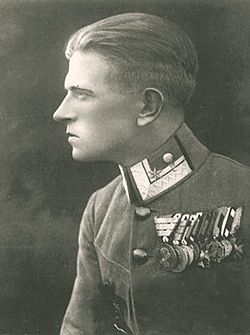
The first aviators to ever achieve "ace in a day" were pilot Julius Arigi and observer/gunner Johann Lasi of the Austro-Hungarian air force, on 22 August 1916, when they downed five Italian planes.[4]
The first single pilot (as opposed to double aviators, as is the case with the previously mentioned Arigi and Lasi) was World War I German flying ace Fritz Otto Bernert. Bernert scored five victories within 20 minutes on 24 April 1917. He had a total of 27 kills during the war, even though he wore glasses and had a useless left arm.[5]
- Andrew Beauchamp-Proctor, the top scoring South African ace of the war, was piloting an SE5a fighter with Royal Air Force No 84 Squadron when he shot down five German aircraft on 19 May 1918.[6]
- Raymond Collishaw, a Canadian who was the top scoring Royal Naval Air Service ace, piloted a Sopwith Triplane when scoring six Albatros D.V fighters near Menen, 6 July 1917.
- John Lightfoot Trollope of the Royal Air Force shot down and destroyed seven German planes on 24 March 1918.[7]
- Henry Woollett von der Royal Air Force schoss am 12. April 1918 sechs deutsche Flugzeuge ab und zerstörte sie; zwei davon setzten er in Brand. [ 8 ]
- Frederick McCall , ein kanadischer Jagdflieger, schoss am 30. Juni 1918 fünf deutsche Jagdflugzeuge ab, vier (drei Albatros DV und eine Fokker D.VII ) am Morgen und das fünfte (ebenfalls eine Albatros DV) am Abend. Für diesen Erfolg wurde ihm der Distinguished Service Order verliehen .
- John Inglis Gilmour von der Royal Air Force schoss am 1. Juli 1918 an einem einzigen Tag fünf deutsche Flugzeuge ab. Dies gelang ihm als Pilot einer Sopwith Camel . [ 9 ]
- Billy Bishop , der erfolgreichste kanadische und britische Jagdflieger des Krieges, flog am 19. Juni 1918 eine SE5 , als er in der Nähe von Ploegsteert vier Pfalz D.III- Jäger und ein zweisitziges Aufklärungsflugzeug vom Typ LVG C abschoss .
- Walter Carl Simon , der in der No. 139 Squadron der RAF diente , wurde am 30. Juli 1918 zum ersten amerikanischen Jagdfliegerass am Tag, als er und sein Beobachter William Smith in einer Bristol F.2b drei Albatros D.III , eine LVG C und ein Aufklärungsflugzeug abschossen.
- Eugene Seeley Coler , wie WC Simon ebenfalls ein Amerikaner, der in der RAF diente, und zwar in der No. 11 Squadron RAF , flog am 13. August 1918 ebenfalls eine Bristol F.2b und schoss zusammen mit seinem Beobachter Cyril William Gladman fünf Fokker D.VII ab. Dafür wurde ihm das Distinguished Flying Cross verliehen .
- Heinrich Gontermann von den Luftstreitkräften erzielte am 19. August 1918 fünf Luftsiege, als er in einer Fokker D.VII am Morgen einen SPAD-Jäger abschoss und am Nachmittag vier alliierte Beobachtungsballons zerstörte. [ 10 ]
- Arthur Spurling , ein Pilot aus Bermuda von der No. 49 Squadron der RAF , flog am 23. August 1918 mit seinem Beobachter Frank Bell einen DH.9- Bomber, als sie im Alleingang dreißig Fokker D.VII- Jäger angriffen und fünf davon abschossen (drei durch Spurling, zwei durch Bell). Zwei Tage später schoss Spurling über Mont Notre Dame eine weitere D.VII ab. Die beiden Besatzungsmitglieder teilten sich die Abschüsse und erreichten jeweils in einem einzigen Einsatz den Status eines Jagdfliegerasses.
- Frank Luke of 27th Aero Squadron USAAS, at the controls of a SPAD XIII, achieved five victories on 18 September 1918, destroying two Fokker D.VII fighters, two observation balloons and an Halberstadt reconnaissance plane. Luke was killed in action 11 days later.[11]
- Friedrich Ritter von Röth of Jagdstaffel 16 shot down five observation balloons in 15 minutes on 29 May 1918.[12]
World War II
Triple-ace in a day
To achieve this a pilot must have destroyed 15 enemy aircraft in a single day. This has been achieved by only five pilots, all from the Luftwaffe:[13]
- Hans-Joachim Marseille shot down 17 Allied fighters in three sorties over North Africa on 1 September 1942.[14]
- Emil Lang shot down 18 Soviet fighters on 3 November 1943, the most kills on a single day by any pilot in history.[15]
- August Lambert shot down 17 Soviet aircraft on a single day in 1944.[16]
- Hubert Strassl shot down 15 Soviet aircraft on 5 July 1943 near Orel.[17]
- Wilhelm Batz claimed 15 Soviet aircraft shot down on 31 May 1944.[18]
Double-ace in a day
To achieve this a pilot must have destroyed ten enemy aircraft in a single day. This has been achieved by twelve pilots, three of whom repeated their achievement a second time within weeks.
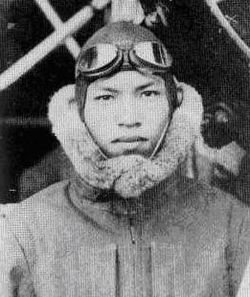
- Hiromichi Shinohara, on 27 June 1939 set an Imperial Japanese Army Air Force record of eleven victories in a single day during an air battle over Tamsak-Bulak. He is highest scoring non-German ace in a day in history.
- Adolf Dickfeld claimed eleven Soviet aircraft shot down on 8 May 1942.[19]
- Hermann Graf, the first fighter pilot to claim 200 aerial victories, shot down ten Soviet aircraft on 23 September 1942.[20]
- Max Stotz claimed ten Soviet aircraft shot down on 30 December 1942.[21]
- Walter Nowotny, the first fighter pilot to claim 250 aerial victories, twice shot down ten in one day. On 24 June 1943 and on 1 September 1943 he claimed ten Soviet aircraft shot down.[22]
- Erich Rudorffer is credited with the destruction of the most aircraft ever in a single mission when he shot down thirteen Soviet aircraft on 11 October 1943.[23]
- Johannes Wiese claimed twelve Soviet aircraft shot down on 5 July 1943.[24][25]
- Walter Wolfrumtwice shot down ten or more aircraft on one day. On 30 May 1944, he claimed eleven Soviet aircraft destroyed and on 16 July 1944, he claimed further ten shot down.[26]
- Walter Schuck claimed eleven Soviet aircraft shot down on 17 June 1944.[27]
- Erich Hartmann, the highest-scoring fighter ace in history, twice shot down ten or more aircraft on one day. On 26 February 1944, he claimed ten planes and eleven on 24 August 1944, in two consecutive missions. In the process, he became the first 300-kill ace in history, and as a result of this, gained the Knight's Cross of the Iron Cross with Oak Leaves, Swords and Diamonds, by then Germany's highest military award for standard servicemen.[28]
- Franz Schalltwice shot down ten or more aircraft on one day. On 26 August 1944, he claimed eleven Soviet aircraft destroyed, and on 31 August 1944, he claimed a further thirteen shot down.[29]
- Heinz-Wolfgang Schnaufer: although claiming only nine aircraft shot down, he destroyed ten RAF bombers on 21 February 1945.[30]
Multiple times ace in a day
Eighteen-time ace in day
- On 7 July 1943, then again on 1 August, 4 August, 5 August, 7 August 1943, 30 January 1944, 1 February 1944, 26 February 1944, 5 May 1944, 1 June 1944, 4 June 1944, 5 June 1944, 6 June 1944, 22 August 1944, 23 August 1944, 24 August 1944, 22 November 1944 and 23 November 1944, Luftwaffe fighter pilot Erich Hartmann became an eighteen-time ace in a day by shooting down seven, five, five, five, five, six, five, ten, six, six, seven, six, five, five, eight, eleven, six and five respectively.[28]
Seventeen-time ace in day

- On 20 July 1942, then again on 2 August 1942, 1 June 1943, 8 June 1943, 21 June 1943, 24 June 1943, 13 August 1943, 18 August 1943, 21 August 1943, 1 September 1943, 2 September 1943, 8 September 1943, 14 September 1943, 15 September 1943, 9 October 1943, 13 October 1943 and 14 October 1943, Walter Nowotny, Luftwaffe fighter pilot on the Eastern Front, became a seventeen-time ace in a day, with five, seven, five, six, six, ten, nine, six, seven, ten, six, five, six, six, eight, six and six respectively.[31]
Thirteen-time ace in day
- On 10 May 1942, then again on 27 September 1942, 30 October 1942, 10 March 1943, 12 March 1943, 13 April 1943, 8 June 1943, 4 July 1943, 25 July 1943, 13 October 1943, 1 February 1944, 25 March 1944 and 7 June 1944, Theodor Weissenberger, Luftwaffe fighter pilot on the Eastern and Western Front, became a thirteen-time ace in a day, with five, five, five, six, five, six, five, seven, five, five, five, five and five respectively.[32]
- On 9 February 1943, then again on 15 February 1943, 24 August 1943, 14 September 1943, 11 October 1943, 6 November 1943, 7 April 1944, 3 July 1944, 26 July 1944, 25 August 1944, 25 September 1944, 10 October 1944 and 28 October 1944, Erich Rudorffer, Luftwaffe fighter pilot on the Eastern Front, became a thirteen-time ace in a day, with eight, seven, eight, five, seven, fourteen, six, five, six, five, six, seven and eleven respectively.[31]
Twelve-time ace in day
- On 1 December 1943, then again on 2 December 1943, 5 December 1943, 8 April 1944, 10 April 1944, 2 May 1944, 31 May 1944, 5 June 1944, 19 July 1944, 17 August 1944, 22 August 1944 and 23 October 1944, Wilhelm Batz, Luftwaffe fighter pilot on the Eastern Front, became a twelve-time ace in a day, with five, five, six, six, five, five, fifteen, eight, six, six, six and five respectively.[33]
Ten-time ace in day
- On 30 July 1941, then again on 13 August 1941, 30 December 1942, 7 January 1943, 12 January 1943, 14 January 1943, 23 January 1943, 23 February 1943, 7 March 1943, and 16 March 1943, Hans Philipp, Luftwaffe fighter pilot on the Eastern Front, became a ten-time ace in a day, with five, five, eight, five, seven, five, six, eight, nine and five respectively.[34]
Nine-time ace in day
- On 17 March 1944, then again on 7 April 1944, 25 May 1944, 15 June 1944, 17 June 1944, 28 June 1944, 17 July 1944, 22 July 1944, and 23 August 1944, Walter Schuck, Luftwaffe fighter pilot on the Eastern Front, became a nine-time ace in a day, with seven, six, six, six, eleven, seven, seven, seven and five victories, respectively.[35]
- On 16 May 1944, then again on 26 May 1944, 17 June 1944, 27 June 1944, 28 June 1944, 4 July 1944, 23 August 1944, 9 October 1944, and 21 October 1944, Franz Dörr, Luftwaffe fighter pilot on the Eastern Front, became a nine-time ace in a day, with seven, five, eight, six, six, five, seven, six and five victories, respectively.[36]
Eight-time ace in day

- On 24 September 1941, then again on 3 and 17 June 1942, 1, 2, 3, 15 and 26 September 1942, Hans-Joachim Marseille, Luftwaffe fighter pilot in the North Africa, became an eight-time ace in a day, claiming five, six, six, seventeen, five, six, seven and seven aerial victories, respectively.[37]
- On 30 April 1942, then again on 2, 8, 13, and 14 May 1942, 14 August 1942, 2 and 23 September 1942, Hermann Graf, Luftwaffe fighter pilot on the Eastern Front, became an eight-time ace in a day, claiming six, seven, eight, six, seven, five, five and ten aerial victories, respectively.[38]
- On 12 January 1943, then again on 4 August 1943, 4 April 1944, 28 June 1944, 14 September 1944, and 9, 27 and 29 October 1944, Otto Kittel, Luftwaffe fighter pilot on the Eastern Front, became an eight-time ace in a day, claiming six, seven, five, five, six, five, seven and six aerial victories, respectively.[39]
- On 7 October 1943, then again on 13, 21, 22, 23 and 24 October 1943, 2 and 3 November 1943, Emil Lang, Luftwaffe fighter pilot on the Eastern Front, became an eight-time ace in a day, claiming five, ten, twelve, nine, six, five, eight and eighteen aerial victories, respectively.[40]
Seven-time ace in day
- On 5 July 1942, then again on 20 October 1943, 28 October 1943, 22 February 1944, 24 June 1944, 16 July 1944 and 8 August 1944, Anton Hafner, Luftwaffe fighter pilot on the Eastern and Western Front, became a seven-time ace in a day.[41]
- On 17 March 1944, then again on 27 June 1944, 28 June 1944, 4 July 1944, 17 July 1944, 17 August 1944 and 23 August 1944, Jakob Norz, Luftwaffe fighter pilot on the Eastern and Western Front, became a seven-time ace in a day.[42]
Six-time ace in day
- On 30 June 1941, then again on 30 August 1941, 19 May 1942, 3 November 1942, 14 January 1943 and 26 February 1943, Heinrich Bär, Luftwaffe fighter pilot on the Eastern and Western Front, became a six-time ace in a day.[43]
- On 22 June 1942, then again on 19 July and 20 July 1942, 2 December, 28 December 1943 and 16 November 1944, Gerhard Barkhorn, Luftwaffe fighter pilot on the Eastern Front, became a six-time ace in a day, claiming five, six, five, six, seven and five aerial victories respectively.[44]
- On 22 August 1942, then again on 3, 29 and 30 December 1942, 14 and 26 January 1943, Max Stotz, Luftwaffe fighter pilot on the Eastern Front, became a six-time ace in a day, claiming five, five, five, ten, seven and six aerial victories respectively.[21]
- On 27 March 1943, then again on 13 April 1943, 17 March 1944, 11 May 1944, 26 May 1944 and 17 July 1944, Heinrich Ehrler, Luftwaffe fighter pilot on the Eastern and Western Front, became a six-time ace in a day, with five, six, seven, five, five and five victories, respectively.[45]
Five-times ace in day
- On 21 August 1941, potentially also on 28 September 1941, then again on 18 and 19 October 1941, 22 October 1941, and 16 August 1942, Gordon Gollob, Luftwaffe fighter pilot on the Eastern Front, became a five-time, maybe six-time, ace in a day.[46]
- On 17 December 1942, then again on 16 April 1943, 23 October 1943, 19 July 1944 and 15 October 1944, Rudolf Trenkel, Luftwaffe fighter pilot on the Eastern Front, became a five-time ace in a day, claiming six, five, five, five and six aerial victories respectively.[47][48]
- On 30 December 1942, then again on 14 and 23 January 1943, Hans "Assi" Hahn, Luftwaffe fighter pilot on the Eastern Front, became a five-time ace in a day, claiming five, seven and five aerial victories respectively.[49]
- On 18 January 1943, then again on 23 February 1943, 24 February 1943, 6 May 1943, and 21 July 1943, Josef Jennewein, Luftwaffe fighter pilot on the Eastern Front, became a five-time ace in a day, claiming five, five, seven, five, and five aerial victories, respectively.[50]
- On 13 July 1943, then again on 7 September 1943, 15 September 1943, 16 February 1945 and 25 April 1945, Günther Josten, Luftwaffe fighter pilot on the Eastern Front, five times became an ace in a day.[51]
- On 2 August 1943, then again on 14 and 20 August 1943, 4 September 1943 and 5 February 1944, Oskar Romm, Luftwaffe fighter pilot on the Eastern Front, became a five-time ace in a day, with five, five, six, five and six victories, respectively.[52]
- On 19 March 1944, then again on 20, 30 and 31 May 1944, and 16 July 1944, Walter Wolfrum, Luftwaffe fighter pilot on the Eastern Front, became a five-time ace in a day, claiming six, five, eleven, six, and ten aerial victories, respectively.[53]
- Am 8. April 1944, dann erneut am 9. April 1944, 17. April 1944, 18. April 1944 und 7. Mai 1944 wurde Gerhard Hoffmann , Jagdflieger der Luftwaffe an der Ostfront, innerhalb eines Tages zum fünffachen Jagdflieger. [ 54 ]
Vierfacher Ass am Tag
- Am 26. Juni 1941, dann erneut am 12. Juli 1941, 7. Juli 1942 und 9. Juli 1942 wurde Viktor Bauer , Jagdflieger der Luftwaffe an der Ost- und Westfront, innerhalb eines Tages zum vierfachen Jagdfliegerass. [ 55 ]
- Am 24. Oktober 1941, dann erneut am 8. Mai 1942, 13. und 14. Mai 1942 wurde Adolf Dickfeld , Jagdflieger der Luftwaffe an der Ostfront, innerhalb eines Tages zum vierfachen Jagdfliegerass, indem er fünf, elf, sechs bzw. acht Luftsiege errang. [ 56 ]
- Am 9. März 1942, dann erneut am 12. Juli 1942, 13. Juli 1942 und 22. Juli 1942 wurde Erwin Clausen , Jagdflieger der Luftwaffe an der Ostfront, innerhalb eines Tages zum vierfachen Jagdfliegerass, indem er jeweils fünf, fünf, fünf und sechs Luftsiege errang. [ 57 ]
- Am 17. Juli 1942, dann erneut am 11. Januar 1943, 13. März 1943 und 1. April 1943 wurde Ernst-Wilhelm Reinert , Jagdflieger der Luftwaffe an der Ostfront und in Nordafrika, innerhalb eines Tages viermal zum Jagdfliegerass, indem er jeweils acht, fünf, sechs und fünf Luftsiege errang. [ 58 ]
- Am 30. August 1942, dann erneut am 7. September 1942, 16. September 1942 und 18. September 1942 wurde Friedrich-Karl „Tutti“ Müller , Jagdflieger der Luftwaffe an der Ostfront, innerhalb eines Tages zum vierfachen Jagdfliegerass mit fünf, sieben, fünf bzw. fünf Luftsiegen. [ 59 ]
- Am 20. April 1943, dann erneut am 8. Mai 1943, 5. Juli 1943 und 7. Juli 1943 wurde Joachim Kirschner , Jagdflieger der Luftwaffe an der Ostfront, innerhalb eines Tages zum vierfachen Jagdfliegerass mit jeweils acht, sieben, acht und fünf Luftsiegen. [ 60 ]
- Am 20. April 1943, dann erneut am 5. November 1943, 6. November 1943 und 8. April 1944 wurde Heinrich Sturm , Jagdflieger der Luftwaffe an der Ostfront, innerhalb eines Tages zum vierfachen Jagdfliegerass, mit fünf, sechs, sechs bzw. acht Luftsiegen. [ 61 ]
- Am 26. Mai 1943, dann erneut am 27. Mai, 4. und 19. August 1943 wurde Berthold Korts , Jagdflieger der Luftwaffe an der Ostfront, dreimal an einem Tag zum Jagdfliegerass, mit fünf, fünf, neun bzw. fünf Luftsiegen. [ 62 ]
- Am 8. Juni 1943, dann erneut am 5. Juli 1943, 7. Juli 1943 und 8. Juli 1943 wurde Hubert Strassl , Jagdflieger der Luftwaffe an der Ostfront, innerhalb eines Tages viermal zum Jagdfliegerass, mit sechs, fünfzehn, sechs bzw. fünf Luftsiegen. [ 63 ]
- On 5 July 1943, then again on 7, 10 and 13 July 1943, Günther Scheel, Luftwaffe fighter pilot on the Eastern Front, became a four-time ace in a day, with eight, seven, five and six victories, respectively.[64]
- On 10 April 1944, then again on 17 April 1944, 4 May 1944, and 6 May 1944, August Lambert, Luftwaffe fighter pilot on the Eastern Front, became a four-time ace in a day, with seven, twelve, nine and fourteen victories, respectively.[65]
- On 16 May 1944, then again on 25 May 1944, 26 May 1944, and 17 June 1944, Rudi Linz, Luftwaffe fighter pilot on the Eastern Front, became a four-time ace in a day, with five, five, five and nine victories, respectively.[66]
Three-time ace in day

- On 22 June 1941, then again on 6 July 1942 and 22 September 1942, Wolf-Dietrich Wilcke, Luftwaffe fighter pilot on the Eastern Front, became a three-time ace in a day, with five, six and six victories, respectively.[67]
- On 24 June 1941, then again on 5 July 1942 and 2 August 1942, Karl-Heinz Schnell, Luftwaffe fighter pilot on the Eastern Front, became a three-time ace in a day, with seven, six and five victories, respectively.[68]
- On 10 July 1941, then again on 12 July 1941 and 12 August 1941, Walter Oesau, Luftwaffe fighter pilot on the Eastern and Western Front, became a three-time ace in a day, with five, seven and six victories, respectively.[69]
- On 17 August 1941, then again on 20 August 1942 and 5 July 1943, Werner Lucas, Luftwaffe fighter pilot on the Eastern Front, became a three-time ace in a day.[70]
- On 24 March 1942, then again on 30 March 1942 and 20 April 1942, Herbert Ihlefeld, Luftwaffe fighter pilot on the Eastern and Western Front, became a three-time ace in a day.[71]
- On 19 April 1942, then again on 21 July 1942 and 23 July 1942, Anton Hackl, Luftwaffe fighter pilot on the Eastern and Western Front, became a three-time ace in a day.[72]
- On 7 July 1942, then again on 4 August 1942 and 9 November 1942, Heinrich Klöpper, Luftwaffe fighter pilot on the Eastern and Western Front, became a three-time ace in a day.[73]
- On 26 July 1942, then again on 7 August 1942 and 5 July 1943, Kurt Brändle, Luftwaffe fighter pilot on the Eastern Front, became a three-time ace in a day.[74]
- On 24 August 1942, then again on 17 September 1942 and 4 August 1943, Heinz Schmidt, Luftwaffe fighter pilot on the Eastern Front, became a three-time ace in a day, with seven, five and five victories, respectively.[59]
- On 4 December 1942, then again on 24 February 1943 and 23 June 1943, Edwin Thiel, Luftwaffe fighter pilot on the Eastern Front, became a three-time ace in a day.[75]
- On 3 May 1943, then again on 20 August 1943 and 10 October 1943, Günther Rall, Luftwaffe fighter pilot on the Eastern Front, and the third highest scoring ace in history, became a three-time ace in a day, claiming five aerial victories on each of these days.[76]
- On 5 July 1943, then again on 4 and 23 August 1943, Gerhard Loos, Luftwaffe fighter pilot on the Eastern Front, became a three-time ace in a day, with five, six and six victories, respectively.[77]
- On 6 July 1943, then again on 26 and 27 September 1943, Rudolf Wagner, Luftwaffe fighter pilot on the Eastern Front, became a three-time ace in a day, with five, five and six victories, respectively.[78]
- On 12 July 1943, then again on 22 November 1943 and 14 October 1944, Joachim Brendel, Luftwaffe fighter pilot on the Eastern Front, became a three-time ace in a day, with five, six and five victories, respectively.[79]
- On 20 July 1943, then again on 2 January 1944 and 21 January 1944, Heinrich Prinz zu Sayn-Wittgenstein, Luftwaffe night fighter pilot on the Eastern and Western Front, became a three-time ace in a day, with seven, six and five victories, respectively.[80]
- On 21 October 1943, then again on 22 October 1943 and 3 November 1943, Reinhold Hoffmann, Luftwaffe fighter pilot on the Eastern Front, became a three-time ace in a day, with seven, eight and eight victories, respectively.[81]
- On 7 January 1944, then again on 13 March 1944 and 19 March 1944, Herbert Bachnick, Luftwaffe fighter pilot on the Eastern Front, became a three-time ace in a day.[82]
- On 22 March 1944, then again on 31 March 1944 and 14 March 1945, Martin Becker, a Luftwaffe night fighter pilot, became a three-time ace in a day, with six, seven and nine victories, respectively.[83]
- On 19 April 1944, then again on 30 May 1944 and 16 October 1944, Hans-Joachim Birkner, Luftwaffe fighter pilot on the Eastern Front, became a three-time ace in a day, with six, five and five victories, respectively.[84]
- On 25 August, then again on 26 August 1944 and 31 August 1944, Anton Resch, Luftwaffe fighter pilot on the Eastern Front, became a three-time ace in a day, with five, seven and seven victories, respectively.[85]
- On 26 August, then again on 31 August 1944 and 1 September 1944, Franz Schall, Luftwaffe fighter pilot on the Eastern Front, became a three-time ace in a day, with eleven, thirteen and five victories, respectively.[86]
Two-time ace in day


1940
- On 17 May 1940, Max Bucholz, a German Oberleutnant of 1./JG 3 shot down four RAF Bristol Blenheims, a Hawker Hurricane and a French Curtis Hawk 75. These were his first victories.[87] On 13 July 1941, he again claimed five aerial victories on the Eastern Front.[88]
- On 5 October 1940, then again on 6 November 1940, Helmut Wick, Luftwaffe fighter pilot on Western Front, twice became an ace in a day.[89]
1941
- On 9 July 1941, then again on 19 August 1942, Siegfried Schnell, Luftwaffe fighter pilot on Western Front, twice became an ace in a day, with six and five victories, respectively.[90]
- On 9 July 1941, then again on 23 July 1941, Kurt Sochatzy, Luftwaffe fighter pilot on the Eastern Front, twice became an ace in a day.[91]
- On 12 July 1941, then again on 12 December 1942, Georg Schentke, Luftwaffe fighter pilot on the Eastern Front, became a two-time ace in a day, claiming five and six aerial victories respectively.[92]
- On 2 August 1941, then again on 16 September 1941, Heinrich Hoffmann, Luftwaffe fighter pilot on the Eastern Front, twice became an ace in a day.[93]
- On 17 August 1941, then again on 26 July 1942, Walter Ohlrogge, Luftwaffe fighter pilot on the Eastern Front, twice became an ace in a day.[94]
1942
- On 16 March 1942, then again on 5 April 1942, Wolfgang Späte, Luftwaffe fighter pilot on the Eastern Front, twice became an ace in a day.[95]
- On 19 March 1942, then again on 16 September 1942, Heinrich Setz, Luftwaffe fighter pilot on the Eastern Front, twice became an ace in a day.[96]
- On 31 March 1942, then again on 5 April 1942, Friedrich Beckh, Luftwaffe fighter pilot on the Eastern Front, became a two-time ace in a day, claiming five and six aerial victories respectively.[97]
- On 20 April 1942, then again on 25 April 1942, Friedrich Geißhardt, Luftwaffe fighter pilot on the Eastern Front, became a two-time ace in a day, claiming five and seven aerial victories respectively.[98]
- On 23 April 1942, then again on 27 September 1942, Rudolf Müller, Luftwaffe fighter pilot on the Eastern Front, became a two-time ace in a day, claiming five and six aerial victories respectively.[99]
- On 2 May 1942, then again on 8 May 1942, Leopold Steinbatz, Luftwaffe fighter pilot on the Eastern Front, became a two-time ace in a day, claiming six and seven aerial victories respectively.[100]
- On 8 May 1942, then again on 13 May 1942, Friedrich Bruckmann, Luftwaffe fighter pilot on the Eastern Front, became a two-time ace in a day, claiming six and five aerial victories respectively.[101]
- On 14 May 1942, then again on 28 September 1942, Karl Gratz, Luftwaffe fighter pilot on the Eastern Front, became a two-time ace in a day, claiming nine and five aerial victories respectively.[102]
- On 22 June 1942, then again on 5 September 1942, Hans Dammers, Luftwaffe fighter pilot on the Eastern Front, twice became an ace in a day.[103]
- On 7 July 1942, then again on 9 August 1942, Joachim Wandel, Luftwaffe fighter pilot on the Eastern Front, twice became ace in a day, claiming six and five aerial victories respectively.[104]
- On 23 July 1942, then again on 7 August 1942, Waldemar Semelka, Luftwaffe fighter pilot on the Eastern Front, twice became an ace in a day.[105]
- Am 24. Juli 1942 und dann erneut am 13. August 1942 wurde Johann Badum , Jagdflieger der Luftwaffe an der Ostfront, zweimal an einem Tag zum Jagdfliegerass. [ 106 ]
- Am 23. August 1942 und dann erneut am 30. August 1942 wurde Johannes Steinhoff , Jagdflieger der Luftwaffe an der Ostfront, zweimal an einem Tag zum Jagdfliegerass. [ 107 ]
- Am 23. August 1942 und dann erneut am 5. März 1943 wurde Hans Beißwenger , Jagdflieger der Luftwaffe an der Ostfront, zweimal an einem Tag zum Jagdfliegerass. [ 108 ]
- Am 22. September 1942 und erneut am 29. November 1942 wurde Josef Zwernemann , Jagdflieger der Luftwaffe an der Ostfront, innerhalb eines Tages zweimal zum Jagdfliegerass, indem er sechs bzw. fünf Luftsiege errang. [ 109 ]
- Am 17. Dezember 1942 und dann erneut am 23. Februar 1943 wurde Günther Schack , Jagdflieger der Luftwaffe an der Ostfront, zweimal an einem Tag zum Jagdfliegerass. [ 110 ]
1943
- Am 14. Januar 1943 und erneut am 14. September 1944 wurde Fritz Tegtmeier , Jagdflieger der Luftwaffe an der Ostfront, zweimal an einem Tag zum Jagdfliegerass, indem er fünf bzw. sechs Luftsiege errang. [ 111 ]
- Am 11. April 1943 und dann erneut am 10. Mai 1943 wurde Wolf-Udo Ettel , Jagdflieger der Luftwaffe an der Ostfront, zweimal an einem Tag zum Jagdfliegerass. [ 112 ]
- Am 5. Mai 1943 und erneut am 6. Mai 1943 wurde Heinz Leber, Jagdflieger der Luftwaffe an der Ostfront, innerhalb eines Tages zweimal zum Jagdfliegerass, indem er fünf bzw. sechs Luftsiege errang. [ 113 ]
- Am 30. Mai 1943 und erneut am 22. Juli 1943 wurde Werner Quast , Jagdflieger der Luftwaffe an der Ostfront, zweimal an einem Tag zum Jagdfliegerass, indem er fünf bzw. sechs Luftsiege errang. [ 114 ]
- Am 10. Juni 1943 und dann erneut am 5. Juli 1943 wurde Max-Hermann Lücke , Jagdflieger der Luftwaffe an der Ostfront, zweimal an einem Tag zum Jagdfliegerass, jeweils mit sieben Luftsiegen. [ 115 ]
- Am 5. Juli 1943 und dann erneut am 4. August 1943 wurde Karl-Heinz Weber , Jagdflieger der Luftwaffe an der Ostfront, zweimal an einem Tag zum Jagdfliegerass. [ 116 ]
- Am 5. Juli 1943 und dann erneut am 14. August 1943 wurde Horst-Günther von Fassong , Jagdflieger der Luftwaffe an der Ostfront, zweimal an einem Tag zum Jagdfliegerass. [ 117 ]
- On 5 July 1943, then again on 20 October 1943, Johannes Wiese, Luftwaffe fighter pilot on the Eastern Front, twice became an ace in a day, claiming twelve and seven aerial victories respectively.[118]
- On 2 August 1943, then again on 8 October 1943, Heinrich Sterr, Luftwaffe fighter pilot on the Eastern Front, twice became an ace in a day, claiming seven and six victories respectively.[119]
- On 14 August 1943, then again on 26 September 1943, Otto Gaiser, Luftwaffe fighter pilot on the Eastern Front, twice became an ace in a day.[120]
- On 14 August 1943, then again on 15 August 1944, Kurt Dombacher, Luftwaffe fighter pilot on the Eastern Front, twice became an ace in a day.[121]
- On 5 November 1943, then again on 16 February 1944, Heinz Wernicke, Luftwaffe fighter pilot on the Eastern Front, twice became an ace in a day.[122]
1944
- On 13 March 1944, then again on 7 April 1944, Andreas Sterl, Luftwaffe fighter pilot on the Eastern Front, became a two-time ace in a day, with five, and seven victories, respectively.[123]
- On 11 April 1944, then again on 4 May 1944, Helmut Bergmann, a Luftwaffe night fighter pilot, became a two-time ace in a day, with seven and five victories, respectively.[124]
- On 11 April 1944, then again on 7 May 1944, potentially on 1 November 1944 as well, Peter Düttmann, Luftwaffe fighter pilot on the Eastern Front, became a two-time ace in a day, with six, nine and five victories, respectively.[125]
- On 4 May 1944, then again on 22 May 1944, Martin Drewes, Luftwaffe night fighter pilot on the Western Front, became a two-time ace in a day, with six and nine victories, respectively.[126]
- On 7 May 1944, then again on 8 June 1944, Heinz Sachsenberg, Luftwaffe fighter pilot on the Eastern Front, became a two-time ace in a day, with six and five victories, respectively.[127]
- On 25 May 1944, then again on 21 February 1945, Heinz-Wolfgang Schnaufer, a Luftwaffe night fighter pilot, became a two-time ace in a day, with five and nine victories, respectively.[128]
- On 17 June 1944, then again on 28 June 1944 and potentially on 16 September 1944, Heinz Arnold, Luftwaffe fighter pilot on the Eastern Front, became a two-time, potentially three-time, ace in a day, with nine, six and five victories, respectively.[129]
- On 17 and 28 June 1944, Helmut Neumann, Luftwaffe fighter pilot on the Eastern Front, became a two-time ace in a day, with eight and six victories, respectively.[130]
- On 19 June 1944, then again on 24 October 1944, Commander David McCampbell, the USN's top ace and Medal of Honor recipient, became a two-time ace in a day, with seven victories during the "Marianas Turkey Shoot", followed by nine victories on the second date.[131]
- On 20 and 25 June 1944, Hans Wind, Finland's second highest scoring fighter ace, became a two-time ace in a day, with five victories both days. This was part of his 13-day tally, from 13 June to 25 June, of 29 aerial victories fighting against the Soviet Summer Offensive. His final World War II tally was 75.[132]
- On 30 June 1944, then again on 5 March 1945, Ulrich Wernitz, Luftwaffe fighter pilot on the Eastern Front, became a two-time ace in a day, with five and eight victories, respectively.[133]
- On 31 August 1944, then again on 16 October 1944, Adolf Nehring, Luftwaffe fighter pilot on the Eastern Front, became a two-time ace in a day, with six and five victories, respectively.[134]
- On 14 September 1944, then again on 22 December 1944, Gerhard Thyben, Luftwaffe fighter pilot on the Eastern Front, twice became an ace in a day, with six and five victories, respectively.[135]
- On 7 October 1944, then again on 24 October 1944, Heinz Marquardt, Luftwaffe fighter pilot on the Eastern Front, became a two-time ace in a day, with eight and five victories, respectively.[136]
- On 13 and 24 October 1944, Johannes Keller, Luftwaffe fighter pilot on the Eastern Front, became a two-time ace in a day.[137]
1945
- On the night of 7/8 February 1945, then again on the night of 15/16 March 1945, Gerhard Raht, Luftwaffe night fighter pilot, became a two-time ace in a day, with six and five victories respectively.[138]
Ace in a day
1940

- On 6 January 1940, Jorma Sarvanto, a Finnish lieutenant, destroyed six Soviet DB-3 bombers in four minutes on one flight, which is the fastest time ever anyone became ace in day with a propeller plane. Sarvanto was the top scoring pilot in the Winter War, with 13 kills. He also scored 4 kills in Continuation War, making a total of 17 kills.[139]
- On 14 May 1940, Hans-Karl Mayer, Luftwaffe fighter pilot on Western Front, became an ace in a day.[140]
- On 29 May 1940 during the Dunkirk evacuation, RAF turret gunner Corporal Albert Lippett and his pilot, Flight Lieutenant Nicholas Gresham Cooke, claimed two Messerschmitt Bf 109 fighters and a Messerschmitt Bf 110 fighter during their first sortie, then added five Junkers Ju 87 bombers in their second that day, becoming Britain's first aces in a day in the Second World War.[141] Both men would die when their Boulton Paul Defiant was shot down on 31 May as they continued to protect the ships and troops at the beach.
- On 5 June 1940, Wilhelm Balthasar, Luftwaffe fighter pilot on the Western Front, shot down five French aircraft.[142]
- On 15 June 1940, Pierre Le Gloan of the French Air Force destroyed five Italian aircraft in one flight.[143]
- On 24 August 1940, Antoni Głowacki, flying with a Polish Squadron in the RAF, (in duty fight R.A.F. 501 (Hawker Hurricane) Squadron shot down three Bf 109s and two Junkers Ju 88 bombers over Ramsgate, to become the first ace in a day of the Battle of Britain.[144]
- Also on 24 August 1940, RAF pilot Ronald Hamlyn shot down five aircraft, flying a Spitfire with 610 Squadron.[145]
- On 31 August 1940, Brian Carbury, a New Zealand flying officer, claimed three Bf 109s and two He 111s in three sorties.[146]
- On 27 September 1940, Albert Gerald Lewis, a South African pilot officer, claimed six German aircraft (three Bf 109s, two Bf 110s and one Ju 88) destroyed, along with two probables and one damaged.
- On 7 October 1940, Archie McKellar. of the RAF shot down five Messerschmitt Bf 109s during the Battle of Britain.[147]
- On 11 December 1940, within six minutes, Charles Dyson of the RAF's No 33 Squadron destroyed six Italian Cr42s.[148]
1941

- On 24 June 1941, Ottmar Maurer, Luftwaffe fighter pilot on the Eastern Front, became an ace in a day.[149]
- On 24 June 1941, Edmund Wagner, Luftwaffe fighter pilot on the Eastern Front, became an ace in a day.[150]
- On 25 June 1941, Hans Kolbow, Luftwaffe fighter pilot on the Eastern Front, became an ace in a day.[151]
- On 26 June 1941, Reinhold Schmetzer of Luftwaffe JG 77 shot down 5 Ilyushin DB-3s.[152]
- On 26 June 1941, Robert Olejnik, Luftwaffe fighter pilot on the Eastern Front, became an ace in a day.[153]
- On 30 June 1941, Hermann-Friedrich Joppien, Luftwaffe fighter pilot on the Eastern Front, became an ace in a day.[154]
- On 23 July 1941, Erich Leie, Luftwaffe fighter pilot on the Western Front, became an ace in a day.[155]
- On 23 July 1941, Rudolf Pflanz, Luftwaffe fighter pilot on the Western Front, became an ace in a day.[156]
- On 26 July 1941, Erich Schmidt, Luftwaffe fighter pilot on the Eastern Front, became an ace in a day.[157]
- On 11 August 1941, Eugen Wintergerst, Luftwaffe fighter pilot on the Eastern Front, claimed seven aerial victories.[158]
- On 14 August 1941, Erbo Graf von Kageneck, Luftwaffe fighter pilot on the Eastern Front, became an ace in a day.[159]
- On 25 August 1941, Stefan Litjens, Luftwaffe fighter pilot on the Eastern Front, became an ace in a day.[160]
- On 17 September 1941, Karl Kempf, Luftwaffe fighter pilot on the Eastern Front, became an ace in a day.[161]
- On 26 September 1941, Heinz Hackler, Luftwaffe fighter pilot on the Eastern Front, became an ace in a day.[162]
- On 8 October 1941, Günther Lützow, Luftwaffe fighter pilot on the Eastern Front, became an ace in a day.[163]
- On 5 December 1941, within a few minutes, Clive Caldwell, the leading Australian ace of the Second World War, destroyed five German aircraft in North Africa.[164]
1942


- On 15 February 1942, Otto Schulz, Luftwaffe fighter pilot in North Africa, became an ace in a day.[165]
- On 19 February 1942, while flying Mitsubishi A6M Zero fighter during the Attack on Darwin, Petty OfficerYoshikazu Nagahama first destroyed one US NavyPBY Catalinaflying boat and then single-handedly shot down four US Army Air ForceP-40 Warhawk fighters in a fight against five of them.[166][167]
- On 20 February 1942, after the aborted raid on Rabaul, Edward O'Hare claimed shooting down five Mitsubishi G4M medium bombers of the 4th Air Group. While he was officially credited with five kills and received Medal of Honor for his action, in reality he most likely only shot down three of them.[168]
- On 18 March 1942, Hans Strelow, Luftwaffe fighter pilot on the Eastern Front, claimed seven aerial victories and became an ace in a day.[169]
- On 2 May 1942, Gerhard Köppen, Luftwaffe fighter pilot on the Eastern Front, became an ace in a day.[170]
- On 10 May 1942, Willi Pfränger, Luftwaffe fighter pilot on the Eastern Front, became an ace in a day.[171]
- On 14 May 1942, Friedrich Wachowiak, Luftwaffe fighter pilot on the Eastern Front, became an ace in a day.[172]
- On 4 June 1942, while escorting the morning strike against Midway Island, Petty OfficerShigetaka Ōmori claimed shooting down two US Marine fighters. After he returned to the carrier Akagi, he and his unit took off again to intercept US Navy strike and claimed shooting down six Douglas TBD Devastator torpedo bombers.[167][173] Nevertheless, some of the bomber kills might have been shared.[167]
- On 4 June 1942, during the Battle of Midway, US Navy Lieutenant (jg)Elbert S. McCuskey was credited for destroying three Aichi D3A dive bombers during the Japanese first attack on the carrier Yorktown. When Yorktown was hit by the same attack, he landed on Enterprise, rearmed his Grumman F4F Wildcat fighter and took off to defend Yorktown against the second attack, during which he claimed two Nakajima B5N torpedo bombers.[174][173]
- On 5 June 1942, Josef Wurmheller, Luftwaffe fighter pilot on the Western Front, became an ace in a day.
- On 22 June 1942, Erwin Leykauf, Luftwaffe fighter pilot on the Eastern Front, became an ace in a day.[175]
- On 26 June 1942, Friedrich Körner, Luftwaffe fighter pilot in North Africa, became an ace in a day.[176]
- On 5 July 1942, Ralph Furch, Luftwaffe fighter pilot on the Eastern Front, became an ace in a day.[177]
- On 5 July 1942, Hartmann Grasser, Luftwaffe fighter pilot on the Eastern Front, became an ace in a day.[178]
- On 5 July 1942, Karl Rammelt, Luftwaffe fighter pilot on the Eastern and Western Front, became an ace in a day.[179]
- On 12 July 1942, Lutz-Wilhelm Burckhardt, Luftwaffe fighter pilot on the Eastern Front, became an ace in a day.[180]
- On 24 July 1942, Leopold Münster, Luftwaffe fighter pilot on the Eastern Front, became an ace in a day.[181]
- On 1 August 1942, Franz-Josef Beerenbrock, Luftwaffe fighter pilot on the Eastern Front, claimed nine aerial victories.[182]
- On 6 August 1942, Alexander Preinfalk, Luftwaffe fighter pilot on the Eastern and Western Front, claimed six aerial victories.[183]
- On 7 August 1942, Hans Fuß, Luftwaffe fighter pilot on the Eastern Front, claimed six aerial victories.[184]
- On 12 August 1942, Richard John Cork of the Royal Navy's Fleet Air Arm shot down five aircraft during the defence of a Malta Convoy in Operation Pedestal.[185]
- On 12 August 1942, Karl-Heinz Bendert, Luftwaffe fighter pilot in North Africa, became an ace in a day.[186]
- On 13 August 1942, Johann Badum, Luftwaffe fighter pilot on the Eastern Front, became an ace in a day. He may have already become an ace in a day on 24 July 1942. He claimed six aerial victories on 24 and 25 July. According to Matthews and Foreman, all six claims were dated on 24 July.[106] According to Prien, Stemmer, Rodeike and Bock, he claimed four on 24 July and two on 25 July.[187]
- On 13 August 1942, Walter Zellot, Luftwaffe fighter pilot on the Eastern Front, became an ace in a day.[188]
- On 19 August 1942, Josef Wurmheller, Luftwaffe fighter pilot on the Western Front, became an ace in a day.[189]
- On 20 August 1942, Heinrich Graf von Einsiedel, Luftwaffe fighter pilot on the Eastern Front, became an ace in a day.[190]
- On 3 September 1942, Hans-Arnold Stahlschmidt, Luftwaffe fighter pilot in North Africa, became an ace in a day, with five victories.[191]
- On 15 September 1942, Werner Schröer, Luftwaffe fighter pilot in North Africa, became an ace in a day, with six victories.[192]
- On 20 September 1942, Hans Röhrig, Luftwaffe fighter pilot on the Eastern Front, became an ace in a day.[193]
- On 22 September 1942, Heinrich Bartels, Luftwaffe fighter pilot on the Eastern Front, became an ace in a day.[194]
- On 29 September 1942, Rudolf Klemm, Luftwaffe fighter pilot on the Eastern Front, became an ace in a day.[195]
- On 25 October 1942, Captain Joe Foss, USMCVMF-121, downed five Japanese planes in two sorties during the Guadalcanal Campaign while flying a Grumman F4F Wildcat. Foss was the second highest scoring Marine ace of the war with 26 victories and was awarded the Medal of Honor. He was also the first Marine to claim ace in a day.[196]
- On 26 October 1942, Stanley "Swede" Vejtasa, a United States Navy (USN) aviator, downed seven Japanese planes in one sortie in the Battle of Santa Cruz while flying a Grumman F4F Wildcat.[197]
- On 28 October 1942, Helmut Rüffler Luftwaffe fighter pilot on the Eastern Front, became an ace in a day.[198]
- On 1 November 1942, Hubertus von Bonin Luftwaffe fighter pilot on the Eastern Front, became an ace in a day.[199]
- On 16 December 1942, Wilhelm Freuwörth Luftwaffe fighter pilot on the Eastern Front, became an ace in a day when he claimed six aerial victories over Soviet Ilyushin Il-2 ground-attack aircraft.[48]
- On 19 December 1942, Kurt Ebener Luftwaffe fighter pilot on the Eastern Front, became an ace in a day.[200]
- On 28 December 1942, Helmut Bennemann Luftwaffe fighter pilot on the Eastern Front, became an ace in a day.[201]
1943


- On 14 January 1943, Alfred Teumer, Luftwaffe fighter pilot on the Eastern Front, became an ace in a day.[202]
- On 31 January 1943, Captain Jefferson DeBlanc, USMC VMF-112, scored five victories in the Guadalcanal Campaign. His actions, despite mechanical problems with his aircraft and being vastly outnumbered, earned him the Medal of Honor.[196]
- On 2 February 1943, Kurt Bühligen, Luftwaffe fighter pilot on the Western Front, became an ace in a day.[203]
- On 12 February 1943, Gustav Denk, Luftwaffe fighter pilot on the Eastern Front, became an ace in a day.[204]
- On 7 March 1943, Walter Hoeckner of Luftwaffe JG 26 shot down 4 Ilyushin Il-2 Shturmoviks and 2 P-40C Tomahawks.[205]
- On 7 April 1943, 1st Lieutenant James E. Swett, USMC VMF-221, scored seven victories fighting against the Japanese Operation I-Go offensive. His actions that day earned him the Medal of Honor.[196][206]
- On 18 April 1943, 2nd Lieutenants Arthur B. Cleaveland,[207] Richard E. Duffy,[208] and MacArthur Powers,[209] USAAF 57th FG, all claimed five Ju 52 transports over the Mediterranean.
- On 13 May 1943, Archie Donahue engaged in a one hour long dogfight west of Florida Island. Donahue possibly became an ace in a day, as he was confirmed to have shot down four Zeros, and most likely shot down a fifth. A fellow Marine verified the fifth kill, but Donahue was never credited for it.[210] also see April 12, 1945. Had it been confirmed, this would have been the first every ace in a day by a carrier based pilot.
- On 26 May 1943, Walter Ehle, Luftwaffe night fighter pilot on the Western Front, became an ace in a day.[211]
- On 10 June 1943, Hans Pfähler, Luftwaffe fighter pilot on the Eastern Front, became an ace in a day.[212]
- On 12 June 1943, Lieutenant (JG) Vernon E. Graham, USNR, with a F4F Wildcat carrier fighter unit that intercepted 35 A6M Zero fighters, shot down 5 Zeroes, ran out of fuel mid-combat, and made a dead-stick landing on Pavuvu.[213]
- On 16 June 1943, 2nd Lieutenant Murray J. Shubin, USAAF 347th FG, shot down five Zeroes near Guadalcanal.[214]
- On 22 June 1943, Hans-Dieter Frank, Luftwaffe night fighter pilot on the Western Front, became an ace in a day.[215]
- On 1 July 1943, Captain Elmer M. Wheadon, USAAF 318 FG, shot down five Japanese planes.[216]
- On 5 July 1943, Johann-Hermann Meier, Luftwaffe fighter pilot on the Eastern Front, became an ace in a day.[217]
- On 5 July 1943, Rudolf Rademacher, Luftwaffe fighter pilot on the Eastern Front, became an ace in a day.[218]
- On 5 July 1943, Emil Bitsch, Luftwaffe fighter pilot on the Eastern Front, became an ace in a day.[219]
- On 5 July 1943, Hans Grünberg, Luftwaffe fighter pilot on the Eastern Front, became an ace in a day.[220]
- On 6 July 1943, Anton Döbele, Luftwaffe fighter pilot on the Eastern Front, became an ace in a day.[221]
- On 13 July 1943, Wilhelm Moritz, Luftwaffe fighter pilot on the Eastern and Western Front, became an ace in a day.[222]
- On 15 July 1943, 1st Lieutenant Joseph J. Lesicka, USAAF 318th FG, downed five Japanese planes in the Pacific Theater.[223]
- On 28 July 1943, Wilhelm Theimann, Luftwaffe fighter pilot on the Eastern Front, became an ace in a day.[224]
- On 14 August 1943, Otto Gaiser, Luftwaffe fighter pilot on the Eastern Front, became an ace in a day.[120]
- On 21 August 1943, Johannes Bunzek, Luftwaffe fighter pilot on the Eastern Front, became an ace in a day.[225]
- On 7 September 1943, Albin Wolf, Luftwaffe fighter pilot on the Eastern Front, became an ace in a day.[226]
- On 16 September 1943, Major Pappy Boyington, USMC VMF-214, scored five victories over the Solomon Islands while flying an F4U Corsair. A Medal of Honor recipient, Boyington was the top scoring Marine fighter pilot during the war, shooting down a total of 28 Japanese aircraft before he too was shot down and captured in January 1944.[196]
- On 19 September 1943, Friedrich Obleser, Luftwaffe fighter pilot on the Eastern Front, became an ace in a day.[227]
- On 8 October 1943, Helmut Lipfert, Luftwaffe fighter pilot on the Eastern, became an ace in a day.[228]
- On 9 October 1943, Major William L. Leverette and 2nd Lieutenant Harry T. Hanna, USAAF 14th FG, both became aces in a day over the Aegean Sea with seven[229] and five[230] Stuka victories, respectively. Leverette was awarded the Distinguished Service Cross and was the first of just two Army Air Forces pilots to claim seven victories in a single mission.[229]
- On 10 October 1943, Walter Krupinski, Luftwaffe fighter pilot on the Eastern, became an ace in a day.[231]
- Am 11. Oktober 1943 schoss Oberst Neel E. Kearby von der 343. Jagdgruppe der USAAF in seiner P-47 „Fiery Ginger“ während eines Einsatzes sechs japanische Flugzeuge ab: vier Ki-43 „Oscar“ und zwei Ki-61 „Tony“. Damit wurde er zum ersten P-47-Fliegerass im Pazifik, zum ersten P-47-Fliegerass bei Tag und stellte einen Rekord der US Army Air Forces für die meisten Luftsiege in einem einzigen Einsatz im Pazifikkrieg auf. Für diesen Einsatz wurde ihm die Ehrenmedaille verliehen , die ihm im Januar 1944 von General Douglas MacArthur überreicht wurde.
- Am 12. Oktober 1943 erzielte Horst Ademeit , Jagdflieger der Luftwaffe an der Ostfront, sechs Luftsiege. [ 232 ]
- Am 27. Oktober 1943 wurde Alois Lechner, Nachtjägerpilot der Luftwaffe an der Ostfront, über Nacht zum Jagdfliegerass. [ 233 ]
- Am 2. November 1943 erzielte Paul-Heinrich Dähne , Jagdflieger der Luftwaffe an der Ostfront, fünf Luftsiege. [ 234 ]
- Am 1. Dezember 1943 wurde Egon Mayer , Jagdflieger der Luftwaffe an der Westfront, innerhalb eines Tages zum Jagdfliegerass. [ 235 ]
- Am 15. Dezember 1943 beanspruchte Diethelm von Eichel-Streiber , Jagdflieger der Luftwaffe an der Ostfront, sechs Luftsiege sowie zwei weitere, nicht bestätigte Abschüsse für sich. [ 236 ]
- Am 15. Dezember 1943 erzielte Konrad Bauer , Jagdflieger der Luftwaffe an der Ostfront, sechs Luftsiege. [ 237 ]
- Am 20. Dezember 1943 erzielte Wilhelm Herget , Nachtjägerpilot der Luftwaffe an der Westfront, acht Luftsiege. [ 238 ]
1944


- Am 14. Januar 1944 erzielte Oberleutnant Robert M. Hanson , USMC VMF-215 , mit einer F4U Corsair fünf Luftsiege über den Salomonen. Er wurde weniger als einen Monat später abgeschossen und getötet. Im Krieg erzielte er 25 Luftsiege. [ 196 ]
- Am 14. Januar 1944 schoss Wendelin Breukel, ein Nachtjägerpilot der Luftwaffe, sechs Avro Lancasters ab. [ 239 ]
- Am 20. Januar 1944 wurde Leopold Fellerer , ein Nachtjägerpilot der Luftwaffe, über Nacht zum Jagdfliegerass. [ 240 ]
- Am 20. Februar 1944 schoss Rudolf Frank , ein deutscher Feldwebel , fünf Avro Lancasters über Deutschland ab. [ 241 ]
- On 20 February 1944, Heinz Vinke, a Luftwaffe night fighter pilot, became an ace in a day.[242]
- On 21 February 1944, Otto Würfel, a Luftwaffe fighter pilot on the Eastern Front, became an ace in a day.[243]
- On 20 March 1944, August Mors, a Luftwaffe fighter pilot on the Eastern Front, became an ace in a day.[244]
- On 29 March 1944, Walther Wever, a Luftwaffe fighter pilot on the Eastern Front, became an ace in a day.[245]
- On 23 April 1944, Horst Berger, a Luftwaffe fighter pilot on the Eastern Front, became an ace in a day.[246]
- On 7 May 1944 Hans Waldmann of the Luftwaffe shot down six Soviet aircraft, taking his total to 120 aerial victories.[247]
- On 7 May 1944, Friedrich Haas, Luftwaffe fighter pilot on the Eastern Front, became an ace in a day.[248]
- On 8 May 1944, 1st Lieutenant Carl J. Luksic, USAAF 352nd FG, shot down three Fw 190s and two Bf 109s in one sortie out of his total of 7 solo and 3 shared victories. He was captured 2 weeks after on the 24th.[249]
- On 12 May 1944, 1st Lieutenant Robert J. Rankin, USAAF 56th FG, shot down five planes over Germany. He finished the war with 10 victories.[250]
- On 30 May 1944, Otto Fönnekold, Luftwaffe fighter pilot on the Eastern Front, shot down seven Bell P-39 Airacobra fighter aircraft.[251]
- On 6 June 1944, Herbert Huppertz, Luftwaffe fighter pilot on the Western Front, shot down three Hawker Typhoon, one North American P-51 Mustang and one Republic P-47 Thunderbolt fighter aircraft to become an ace in a day.[252]
- On 10 June 1944, 2nd Lieutenant Herbert B. Hatch Jr., USAAF 1st FG, shot down five enemy planes, probably destroyed a sixth and damaged another over Rumania.[253]
- On 15 June 1944, Lieutenant Lloyd G 'Barney' Barnard, USN VF-2, shot down five Japanese Zero fighters in a single mission off the Bonin Islands.[254][255]
- On 19 June 1944, Helmut Grollmus, Luftwaffe fighter pilot on the Eastern Front, became an ace in a day, claiming six aerial victories.[256]
- On 19 June 1944, Commander Charles W. Brewer, USN VF-15 (five);[257] Lieutenants George R. Carr, USN VF-15 (five);[258]Alexander Vraciu, USN VF-16 (six);[259] and Ensign Wilbur 'Spider' Webb, USN VF-17 (six+);[260] all became aces in a day over Guam in a single mission.[261]
- On 23 June 1944, Wilhelm Hübner, Luftwaffe fighter pilot on the Eastern Front, became an ace in a day, claiming eight aerial victories.[262]
- On 30 June 1944, Ilmari Juutilainen, Finland's top scoring fighter ace, shot down six Soviet planes flying against the same Soviet Summer Offensive as colleague and fellow ace in a day Wind. Juutilainen's final World War II score was 94, highest scoring non-German pilot ever.
- On 7 July 1944, Fred J. Christensen, USAAF 56th FG, attacked with his squadron 12 Junkers Ju 52 which were landing on Gardelegen airfield. Squadron claimed 10 destroyed, thereof Christensen claimed 6 and set record as first pilot in 8th Air Force and first American pilot in European Theatre to claim 6 kills in one day and in one sortie.[263]
- On 21 July 1944, Sigurd Haala, Luftwaffe fighter pilot on the Eastern Front, became an ace in a day.[264]
- On 6 August 1944, George Preddy, USAAF 352nd FG, shot down six German Bf 109s. He was the top USAAF P-51 Mustang ace (26.83 kills, including shared kills).[223]
- On 9 August 1944, Heinz Busse, a Luftwaffe fighter pilot on the Eastern Front, became an ace in a day.[265]
- On 5 September 1944, 1st Lieutenant William H. Allen, USAAF 55th FG, shot down five planes over Europe.[223][266]
- On 13 September 1944, USN pilot Lieutenant Arthur Ray Hawkins shot down five Japanese planes in a sortie over the Philippines, becoming an ace in a day.[267]
- On 14 September 1944, Franz Eisenach, Luftwaffe fighter pilot on the Eastern Front, became an ace in day with nine aerial victories claimed that day.[268]
- Am 27. September 1944 schoss Oberleutnant William R. Beyer von der 361. Jagdgruppe der USAAF in der Nähe von Eisenach fünf Fw 190 ab. Er beendete den Krieg mit neun Abschüssen. [ 223 ]
- Am 28. September 1944 schoss Leutnant John H. Wainwright Jr. von der 405. Jagdgruppe der USAAF sechs Flugzeuge über Europa ab. [ 269 ]
- Am 12. Oktober 1944 schoss Oberleutnant Charles „Chuck“ Yeager von der 357. Jagdgruppe der USAAF in einem einzigen Einsatz fünf Bf 109 ab. Er beendete den Krieg mit zwölf Luftsiegen. Am 14. Oktober 1947 durchbrach er als erster Pilot mit dem Raketenflugzeug Bell X-1 die Schallmauer im Horizontalflug. [ 223 ]
- Am 24. Oktober 1944 wurden Lieutenant Commander Harold N. Funk, USN VF-23 (fünf); [ 270 ] Lieutenants Carl A. Brown Jr. , USN VF-27 (fünf); [ 271 ] Kenneth G. Hippe, USN VC-3 (fünf); [ 272 ] William J. Masoner Jr., USN VF-19 (sechs); [ 273 ] Roy W. Rushing, USN VF-15 (sechs+); [ 274 ] James A. Shirley, USN VF-22 (fünf); [ 275 ] Eugene P. Townsend, USN VF-27 (fünf+); [ 276 ] und Ensign Thomas J. Conroy, USN VF-22 (sechs); [ 277 ] an einem einzigen Tag vor den Philippinen zu Jagdfliegerassen.
- Am 2. November 1944 schoss Donald S. Bryan von der 352. Jagdgruppe der USAAF fünf deutsche Bf 109 ab, als er auf dem Weg war, B-17-Bomber auf einem Einsatz nach Deutschland zu eskortieren. [ 278 ]
- Am 16. November 1944 schoss Captain John J. Voll von der 31. Jagdgruppe der USAAF fünf Flugzeuge über Deutschland ab. [ 279 ]
- Am 21. November 1944 schoss Captain William T. Whisner von der 352. Jagdgruppe der USAAF sechs Fw 190 ab und einen weiteren wahrscheinlich. Er kämpfte im Koreakrieg und wurde einer von sieben Jagdfliegerassen in zwei Kriegen (16 Alleinabschüsse und ein geteilter Abschuss im Zweiten Weltkrieg; sechs Alleinabschüsse und ein geteilter Abschuss im Koreakrieg). [ 223 ] [ 280 ]
- Am 26. November 1944 schoss Oberleutnant J. S. Daniell von der 339. Jagdgruppe der USAAF fünf Flugzeuge über Deutschland ab. [ 281 ]
- Am 27. November 1944 schoss Captain Leonard K. Carson von der 357. Jagdgruppe der USAAF 5 Fw 190 ab. Er beendete den Krieg mit 18 Abschüssen. [ 223 ]
- Am 4. Dezember 1944 schoss Major William J. Hovde von der 355. Jagdgruppe der USAAF über Berlin vier Fw 190 und eine Bf 109 ab und teilte sich den Abschuss einer weiteren Fw 190. [ 282 ]
- Am 14. Dezember 1944 schoss Leutnant Robert H. Anderson, USN VBF-80, fünf japanische Flugzeuge ab und vermutlich ein sechstes vor den Philippinen. [ 283 ]
- Am 18. Dezember 1944 schossen Oberleutnant David B. Archibald [ 284 ] und Oberleutnant Paul E. Olson [ 285 ] von der 359. Jagdgruppe der USAAF jeweils fünf Fw 190 ab, bevor auch sie abgeschossen und als Kriegsgefangene gefangen genommen wurden.
- Am 21. Dezember 1944 wurde Hans-Joachim Kroschinski , Jagdflieger der Luftwaffe an der Ostfront, über Nacht zum Jagdfliegerass [ 286 ].
- Am 23. Dezember 1944 schoss Oberstleutnant Edward O. McComas von der 23. Jagdgruppe der USAAF fünf japanische Flugzeuge über China ab. [ 223 ]
- Am 23. Dezember 1944 schoss Oberstleutnant David C. Schilling von der 56. Jagdgruppe der USAAF über Bonn drei Bf 109 und zwei Fw 190 ab . [ 287 ]
- Am 27. Dezember 1944 schoss Captain Ernest E. Bankey von der 364. Jagdgruppe der USAAF im Raum Bonn vier Fw 190 und eine Bf 109 ab und teilte sich den Abschuss einer weiteren Bf 109. Er beendete den Krieg mit 9,5 Abschüssen. [ 288 ]
- Am 29. Dezember 1944 zerstörte Richard Joseph „Dick“ Audet von der 411. Staffel der RCAF , der eine Spitfire IXe flog , innerhalb von sieben Minuten zwei Bf 109 und drei Focke-Wulf Fw 190 über Osnabrück . [ 289 ]
1945

- Am 3. Januar 1945 erzielte Heinz Ewald , Jagdflieger der Luftwaffe an der Ostfront, fünf Luftsiege. [ 290 ]
- Am 11. Januar 1945 schoss Captain William A. Shomo von der 71. Jagdgruppe der USAAF in einem einzigen Einsatz über den Philippinen sieben japanische Flugzeuge ab und wurde dafür mit der Ehrenmedaille ausgezeichnet. [ 291 ]
- Am 14. Januar 1945 schoss Captain Felix D. Williamson von der 56. Jagdgruppe der USAAF in einem einzigen Einsatz fünf deutsche Jagdflugzeuge ab und wurde dafür mit dem Distinguished Service Cross ausgezeichnet . [ 292 ]
- On 16 February 1945, Lieutenant Alexander L. Anderson, USN VBF-80 (five);[293] Lieutenant Patrick D. Fleming, USN VBF-80 (five);[294] became aces in a day over Tokyo in a single mission.
- On the night of 21/22 February 1945, Günther Bahr, Luftwaffe night fighter pilot, became an ace in a day, when he shot down seven bombers.[295]
- On 14 March 1945, 1st Lieutenant Gordon H. McDaniel, USAAF 325th FG, shot down five Fw 190s in the Mediterranean Theater of operations.[296]
- On 15 March 1945, Ferdinand Löschenkohl, Luftwaffe fighter pilot on the Eastern Front, claimed five aerial victories.[297]
- On 16 March 1945, Erich Jung, Luftwaffe night fighter pilot, became an ace in a day, claiming eight nocturnal aerial victories.[298]
- On 18 March 1945, Lieutenant Commander Marshall U. Beebe, USN VF-17, shot down five Japanese fighters over Kyushu.[299]
- On 21 March 1945, Johannes Hager, Luftwaffe fighter pilot on the Western Front, claimed five aerial victories.[300]
- On 22 March 1945, Lieutenant Colonel Sidney S. Woods, USAAF 4th FG, shot down five Fw 190s over Germany. Woods had previously claimed two victories in the Pacific, these were his last claims of the war.[301]
- On 24 March 1945, Major Robert A. Elder and Lieutenant Colonel Wayne K. Blickenstaff, USAAF 353rd FG, both became aces in a day over Germany. Elder shot down four Fw 190s, one Bf 109 and damaged one Fw 190; these were his only claims in the war.[302] Blickenstaff, who was already an ace with five kills, destroyed two Fw 190s and three Bf 109s. These were his last claims in the war.[303]
- On 2 April 1945, 1st Lieutenant Bruce W. Carr, USAAF 354th FG, shot down five planes and damaged a sixth over Germany.[304]
- On 12 April 1945, Major Archie Donahue, USMC VMF-451, scored five victories over Okinawa. Donahue was already an ace with nine kills, these were his last claims of the war.[305] This was the first ever official ace in a day by a carrier based f4u pilot.This was his second ace in a day, also see May 13, 1943
- Am 17. April 1945 schoss Lieutenant Commander Eugene Valencia , USN VF-9, sechs japanische Flugzeuge über Okinawa ab . [ 306 ]
- Am 22. April 1945 wurden drei amerikanische Piloten des USMC- Geschwaders VMF-323 „Death Rattlers“ im Kampf um Okinawa innerhalb eines Tages zu Jagdfliegerassen : Major Jefferson Dorroh (sechs Abschüsse); [ 307 ] Major George C. Axtell (fünf oder mehr Abschüsse); [ 308 ] und Oberleutnant Jeremiah Joseph O'Keefe (fünf Abschüsse). [ 309 ]
- Am 25. Mai 1945 wurden zwei amerikanische Piloten unabhängig voneinander an einem Tag über Okinawa zu Jagdfliegerassen : Oberleutnant Richard H. Anderson (USAAF, 318. Jagdgruppe) schoss fünf Zero-Jäger ab und hatte einen sechsten im Visier, als ihm die Munition ausging; [ 310 ] Hauptmann Herbert J. Valentine (USMC, VMF-312 ) schoss fünf japanische Flugzeuge ab und war damit der letzte Marine des Krieges, der an einem Tag Jagdfliegerasse wurde. [ 311 ]
- Am 28. Mai 1945 schoss Captain John E. Vogt von der 318. Jagdgruppe der USAAF fünf Zero-Kampfflugzeuge über Kyushu, Japan, ab. Dies waren seine einzigen Abschussmeldungen im Krieg. [ 312 ]
- Am 10. Juni 1945 schoss Leutnant Robert J. Stone von der 318. Jagdgruppe der USAAF fünf japanische Flugzeuge über dem Pazifik ab. [ 223 ]
- Am 13. August 1945 wurde Oberleutnant Oscar Perdomo von der 475. Jagdgruppe der USAAF zum letzten Jagdfliegerass des Zweiten Weltkriegs, indem er alle seine fünf Luftsiege im Kampf gegen einen japanischen Angriff nahe Keijo (Seoul), Korea, errang . [ 313 ]
Indisch-Pakistanischer Krieg von 1965

Während des Indisch-Pakistanischen Krieges von 1965 schoss Muhammad Mahmood Alam von der pakistanischen Luftwaffe am 7. September 1965 in weniger als einer Minute fünf Flugzeuge in einem einzigen Einsatz ab und stellte damit einen Luftrekord auf. Alam ist zudem der einzige Jetpilot, dem ein solcher Tagesabschuss gelang. [ 314 ] [ 315 ] [ 316 ] [ 317 ]
Russisch-Ukrainischer Krieg
- Der „Geist von Kiew“ [ 318 ] war der Spitzname eines mythischen MiG-29 Fulcrum -Fliegerasses [ 319 ] [ 320 ] [ 321 ] , das angeblich am 24. Februar 2022 während der Kiew-Offensive sechs russische Flugzeuge über Kiew abgeschossen und sich so quasi über Nacht zum Fliegerass entwickelt hatte. Der Ursprung des Mythos ist unklar, er wurde jedoch von ukrainischen und westlichen Medien sowie von offiziellen Stellen wie den ukrainischen Streitkräften und dem ukrainischen Sicherheitsdienst weit verbreitet . Dem „Geist von Kiew“ wurde zugeschrieben, die Moral der Ukrainer während des russisch-ukrainischen Krieges gestärkt zu haben . Zwei Monate nach Verbreitung der Geschichte räumte die ukrainische Luftwaffe ein, dass sie nicht der Wahrheit entsprach, und warnte die Bevölkerung davor, „die Grundregeln der Informationshygiene zu missachten“ und „die Quellen von Informationen zu überprüfen, bevor man sie weiterverbreitet“. [ 319 ]
- Am 13. Oktober 2022 behauptete die ukrainische Regierung, der ukrainische Pilot Wadym Woroschilow habe fünf Shahed-136-Drohnen abgeschossen, bevor er sich aus seiner MiG-29 retten musste, nachdem diese von Trümmern der zuletzt abgeschossenen Shahed-136 getroffen worden war. Woroschilow hatte bereits am Vortag zwei russische Marschflugkörper abgeschossen, was jedoch noch nicht von unabhängigen Quellen offiziell bestätigt wurde. [ 322 ] [ 323 ]
Hamas-Krieg

- USAF-Hauptmann Lacie Hester, Waffensystemoffizier, und Pilot Major Benjamin Coffey wurden mit dem Silver Star ausgezeichnet, weil sie im April 2024 während der iranischen Angriffe auf Israel mit ihrer F-15E mindestens sechs iranische Drohnen abgeschossen hatten . [ 324 ]
- Die Kapitäninnen Claire Eddins und Carla Nava schossen im selben Gefecht ebenfalls 5 Drohnen ab [ 325 ].
Siehe auch
- Luftsiegstandarten des Ersten Weltkriegs
- Bestätigung und Übertreibung von Luftsiegen im Zweiten Weltkrieg
- Listen der Jagdfliegerasse des Ersten Weltkriegs
- Liste der Jagdfliegerasse des Zweiten Weltkriegs
Anmerkungen
Referenzen
Zitate
- ^ Geissinger 1997 .
- ^ Guttman 2007 , S. 30–32.
- ^ Franks & Bailey 1992 , S. 161.
- ^ O'Connor 1994 , S. 190–191, 272, 324.
- ^ Franks, Bailey & Guest 1993 , S. 70.
- ^ Shores 2014 , S. 63–65.
- ^ Shores, Franks & Guest 1990 , S. 368.
- ^ Shores, Franks & Guest 1990 , S. 390.
- ^ Franks 2003 , S. 61–63.
- ^ Franks 2001 , S. 20–22.
- ^ Franks 2002 , S. 74–76.
- ^ Franks, Bailey & Guest 1993 , S. 193–194.
- ^ „Jan J. Safarik: Air Aces Homepage; Deutschland – Die meisten Abschüsse an einem Tag, in einer Nacht und in einer Mission“ . Aces.safarikovi.org . Abgerufen am 13. Juni 2026 .
- ^ Caldwell 2002 , S. 395.
- ^ Weal 1998 , S. 72.
- ^ Weal 2003 , S. 90.
- ^ Mathews & Foreman 2015c , S. 1281.
- ^ Weal 2004 , S. 107.
- ^ Mathews & Foreman 2014 , S. 216–217.
- ^ Mathews & Foreman 2015a , S. 413.
- ^ a b Mathews & Foreman 2015c , S. 1276–1279.
- ^ Prien et al. 2012 , S. 175, 183.
- ^ Williamson 2005 , S. 46.
- ^ Prien et al. 2012 , S. 285–286.
- ^ Mathews & Foreman 2015c , S. 1418–1419.
- ^ Mathews & Foreman 2015c , S. 1446–1447.
- ^ Mathews & Foreman 2015c , S. 1180.
- ^ a b Mathews & Foreman 2015a , S. 485–492.
- ^ Mathews & Foreman 2015c , S. 1103–1104.
- ^ Mathews & Foreman 2015c , S. 1152.
- ^ a b Mathews & Foreman 2015b , S. 1065–1069.
- ^ Mathews & Foreman 2015c , S. 1392–1396.
- ^ Mathews & Foreman 2014 , S. 53–57.
- ^ Mathews & Foreman 2015b , S. 960–964.
- ^ Mathews & Foreman 2015c , S. 1178–1181.
- ^ Mathews & Foreman 2014 , S. 235–237.
- ^ Mathews & Foreman 2015b , S. 810–813.
- ^ Mathews & Foreman 2015a , S. 409–413.
- ^ Mathews & Foreman 2015a , S. 634–639.
- ^ Mathews & Foreman 2015a , S. 714–717.
- ^ Mathews & Foreman 2015a , S. 457–460.
- ^ Mathews & Foreman 2015b , S. 920–922.
- ^ Mathews & Foreman 2014 , S. 34–39.
- ^ Mathews & Foreman 2014 , S. 40–46.
- ^ Mathews & Foreman 2014 , S. 268–271.
- ^ Mathews & Foreman 2015a , S. 398–401.
- ^Mathews & Foreman 2015c, pp. 1335–1338.
- ^ abPrien et al. 2006, p. 438.
- ^Mathews & Foreman 2015a, pp. 465–467.
- ^Mathews & Foreman 2015a, pp. 583–584.
- ^Mathews & Foreman 2015a, pp. 589–593.
- ^Mathews & Foreman 2015b, pp. 1056–1058.
- ^Mathews & Foreman 2015c, pp. 1444–1447.
- ^Mathews & Foreman 2015a, pp. 533–535.
- ^Mathews & Foreman 2014, pp. 61–62.
- ^Mathews & Foreman 2014, pp. 215–218.
- ^Mathews & Foreman 2014, pp. 189–190.
- ^Mathews & Foreman 2015b, pp. 1021–1025.
- ^ abMathews & Foreman 2015c, pp. 1140–1143.
- ^Mathews & Foreman 2015a, pp. 630–633.
- ^Mathews & Foreman 2015c, pp. 1293–1295.
- ^Mathews & Foreman 2015a, pp. 673–675.
- ^Mathews & Foreman 2015c, pp. 1280–1282.
- ^Mathews & Foreman 2015c, pp. 1110–1111.
- ^Mathews & Foreman 2015a, pp. 711–712.
- ^Mathews & Foreman 2015a, pp. 756–757.
- ^Mathews & Foreman 2015c, pp. 1421–1424.
- ^Mathews & Foreman 2015c, pp. 1157–1158.
- ^Mathews & Foreman 2015b, pp. 932–934.
- ^Mathews & Foreman 2015a, pp. 776–777.
- ^Mathews & Foreman 2015a, pp. 570–572.
- ^Mathews & Foreman 2015a, pp. 451–454.
- ^Mathews & Foreman 2015a, pp. 646–648.
- ^Mathews & Foreman 2014, pp. 138–141.
- ^Mathews & Foreman 2015c, pp. 1317–1318.
- ^Mathews & Foreman 2015b, pp. 1003–1008.
- ^Mathews & Foreman 2015a, pp. 768–770.
- ^Mathews & Foreman 2015c, pp. 1365–1367.
- ^Mathews & Foreman 2014, pp. 147–151.
- ^Mathews & Foreman 2015c, pp. 1092–1093.
- ^Mathews & Foreman 2015a, pp. 537–538.
- ^Mathews & Foreman 2014, pp. 27–28.
- ^Mathews & Foreman 2014, pp. 68–69.
- ^Mathews & Foreman 2014, pp. 105–107.
- ^Mathews & Foreman 2015b, pp. 1030–1031.
- ^ Mathews & Foreman 2015c , S. 1102–1104.
- ^ Mathews & Foreman 2014 , S. 168.
- ^ Mathews & Foreman 2014 , S. 169.
- ^ Mathews & Foreman 2015c , S. 1412–1413.
- ^ Mathews & Foreman 2015c , S. 1158–1160.
- ^ Prien et al. 2003a , S. 140, 144.
- ^ Mathews & Foreman 2015c , S. 1115–1116.
- ^ Mathews & Foreman 2015a , S. 535–537.
- ^ Mathews & Foreman 2015b , S. 935–936.
- ^ Mathews & Foreman 2015c , S. 1232–1234.
- ^ Mathews & Foreman 2015c , S. 1215–1218.
- ^ Mathews & Foreman 2014 , S. 70–71.
- ^ Mathews & Foreman 2015a , S. 377–379.
- ^ Mathews & Foreman 2015b , S. 884–886.
- ^ Mathews & Foreman 2015c , S. 1252–1254.
- ^ Mathews & Foreman 2014 , S. 163.
- ^ Mathews & Foreman 2015a , S. 418–421.
- ^ Mathews & Foreman 2014 , S. 205–207.
- ^ Mathews & Foreman 2015c , S. 1275–1377.
- ^ Mathews & Foreman 2015c , S. 1212–1214.
- ^ a b Mathews & Foreman 2014 , S. 28–29.
- ^ Mathews & Foreman 2015c , S. 1257–1260.
- ^ Mathews & Foreman 2014 , S. 77–80.
- ^ Mathews & Foreman 2015c , S. 1472–1474.
- ^ Mathews & Foreman 2015c , S. 1094–1097.
- ^ Mathews & Foreman 2015c , S. 1307–1310.
- ^ Mathews & Foreman 2014 , S. 292–294.
- ^ Mathews & Foreman 2015a , S. 728–729.
- ^ Mathews & Foreman 2015b , S. 993–994.
- ^ Mathews & Foreman 2015a , S. 778–779.
- ^ Mathews & Foreman 2015c , S. 1378–1381.
- ^ Mathews & Foreman 2014 , S. 300–302.
- ^ Mathews & Foreman 2015c , S. 1417–1419.
- ^ Mathews & Foreman 2015c , S. 1267–1269.
- ^ a b Mathews & Foreman 2015a , S. 361–362.
- ^ Mathews & Foreman 2014 , S. 231–232.
- ^ Mathews & Foreman 2015c , S. 1402–1404.
- ^ Mathews & Foreman 2015c , S. 1265–1266.
- ^ Mathews & Foreman 2014 , S. 90.
- ^Mathews & Foreman 2014, pp. 250–251.
- ^Mathews & Foreman 2014, pp. 241–242.
- ^Mathews & Foreman 2015c, pp. 1083–1085.
- ^Mathews & Foreman 2015c, pp. 1150–1152.
- ^Mathews & Foreman 2014, pp. 17–18.
- ^Mathews & Foreman 2015b, pp. 909–910.
- ^"David S. McCampbell". Military Times.
- ^Stenman 2001, p. 123.
- ^Mathews & Foreman 2015c, pp. 1404–1405.
- ^Mathews & Foreman 2015b, pp. 903–904.
- ^Mathews & Foreman 2015c, pp. 1321–1324.
- ^Mathews & Foreman 2015b, pp. 807–809.
- ^Mathews & Foreman 2015a, p. 618.
- ^Mathews & Foreman 2015b, pp. 1001–1002.
- ^Sarvanto 2005, p. 202.
- ^Mathews & Foreman 2015b, p. 823.
- ^Shores 1994, p. 190.
- ^Mathews & Foreman 2014, p. 32.
- ^Ketley 1999, p. 76.
- ^Shores 1994, p. 287–288.
- ^"Battle of Britain London Monument – Sgt. R F Hamlyn". Bbm.org.uk. Retrieved 28 April 2021.
- ^Lambert 2011, p. 154.
- ^Holmes 1998, p. 105.
- ^Shores 1994, p. 244.
- ^Mathews & Foreman 2015b, pp. 818–819.
- ^Mathews & Foreman 2015c, pp. 1364–1364.
- ^Mathews & Foreman 2015a, p. 664.
- ^Mathews & Foreman 2015c, p. 1134.
- ^Mathews & Foreman 2015b, pp. 937–938.
- ^Mathews & Foreman 2015a, pp. 588–589.
- ^Mathews & Foreman 2015a, pp. 734–736.
- ^Mathews & Foreman 2015b, pp. 957–958.
- ^Mathews & Foreman 2015c, p. 1138.
- ^Mathews & Foreman 2015c, p. 1430.
- ^Mathews & Foreman 2015a, pp. 599–601.
- ^Mathews & Foreman 2015a, p. 764.
- ^Mathews & Foreman 2015a, pp. 621–622.
- ^Prien et al. 2003b, p. 371.
- ^Mathews & Foreman 2015a, pp. 787–789.
- ^Holmes 2002, p. 107.
- ^Mathews & Foreman 2015c, pp. 1188–1189.
- ^ Tagaya 2011 .
- ^ a b c Hata, Izawa & Shores 2011 .
- ^ Lundstrom 2005 , S. 83–110.
- ^ Mathews & Foreman 2015c , S. 1286–1287.
- ^ Mathews & Foreman 2015b , S. 669–671.
- ^ Mathews & Foreman 2015b , S. 958–959.
- ^ Mathews & Foreman 2015c , S. 1362–1364.
- ^ a b Millman 2019 , Kapitel 3: Halbzeit.
- ^ Lundstrom 2005 , S. 369–411.
- ^ Mathews & Foreman 2015b , S. 750.
- ^ Mathews & Foreman 2015b , S. 672–673.
- ^ Mathews & Foreman 2014 , S. 353.
- ^ Mathews & Foreman 2015a , S. 415–417.
- ^ Mathews & Foreman 2015b , S. 1008–1009.
- ^ Mathews & Foreman 2014 , S. 176–177.
- ^ Mathews & Foreman 2015b , S. 893–895.
- ^ Mathews & Foreman 2014 , S. 74.
- ^ Mathews & Foreman 2015b , S. 978–979.
- ^ Mathews & Foreman 2014 , S. 355.
- ^ Shores 1994 , S. 191.
- ^ Mathews & Foreman 2014 , S. 83–84.
- ^ Prien et al. 2006 , S. 307.
- ^ Mathews & Foreman 2015c , S. 1459–1461.
- ^ Mathews & Foreman 2015c , S. 1454–1456.
- ^ Mathews & Foreman 2014 , S. 275–276.
- ^ Mathews & Foreman 2015c , S. 1242–1243.
- ^ Mathews & Foreman 2015c , S. 1175–1177.
- ^ Mathews & Foreman 2015b , S. 1048–1050.
- ^ Mathews & Foreman 2014 , S. 47–49.
- ^ Mathews & Foreman 2015a , S. 644–645.
- ^ a b c d e Tillman 2014 , S. 235.
- ^ „Swede Vejtasa: In Memoriam“ . Naval Aviation News . Naval Air Warfare Division, USN . 09.05.2013 . Abgerufen am 05.10.2017 .
- ^ Mathews & Foreman 2015b , S. 1070–1071.
- ^ Mathews & Foreman 2014 , S. 121–123.
- ^ Mathews & Foreman 2014 , S. 253–254.
- ^ Mathews & Foreman 2014 , S. 84–86.
- ^ Mathews & Foreman 2015c , S. 1312–1314.
- ^ Mathews & Foreman 2014 , S. 171–173.
- ^Mathews & Foreman 2014, pp. 212–213.
- ^Mathews & Foreman 2015a, pp. 529–531.
- ^"James Elms Swett". Military Times.
- ^"Arthur Bernard Cleaveland". Military Times.
- ^"Richard E. Duffy". Military Times.
- ^"MacArthur Powers". Military Times.
- ^"Archie Donahue". Military Times.
- ^Mathews & Foreman 2014, p. 264.
- ^Mathews & Foreman 2015b, p. 955.
- ^Hess & Boyce 1996, p. 212.
- ^"Murray Joseph Shubin". Military Times.
- ^Mathews & Foreman 2014, pp. 329–330.
- ^"Elmer Melvin Wheadon". Military Times.
- ^Mathews & Foreman 2015b, pp. 829–831.
- ^Mathews & Foreman 2015b, pp. 996–998.
- ^Mathews & Foreman 2014, pp. 107–109.
- ^Mathews & Foreman 2015a, pp. 438–440.
- ^Mathews & Foreman 2014, pp. 225–227.
- ^Mathews & Foreman 2015b, pp. 869–870.
- ^ abcdefghiArthur Wyllie (6 April 2009). Army Air Force Victories. Lulu.com. ISBN 978-0-615-15549-4.
- ^Mathews & Foreman 2015c, pp. 1315–1316.
- ^Mathews & Foreman 2014, pp. 174–175.
- ^Mathews & Foreman 2015c, pp. 1440–1442.
- ^Mathews & Foreman 2015b, pp. 929–931.
- ^Mathews & Foreman 2015a, pp. 758–762.
- ^ ab"William Lawrence Leverette". Military Times.
- ^"Harry Troy Hanna". Military Times.
- ^Mathews & Foreman 2015a, pp. 696–700.
- ^Mathews & Foreman 2014, pp. 5–7.
- ^Mathews & Foreman 2015a, pp. 729–730.
- ^Mathews & Foreman 2014, pp. 203–204.
- ^Mathews & Foreman 2015b, pp. 821–823.
- ^Mathews & Foreman 2014, pp. 271–273.
- ^Mathews & Foreman 2014, pp. 59–60.
- ^ Mathews & Foreman 2015a , S. 515.
- ^ Mathews & Foreman 2014 , S. 153.
- ^ Mathews & Foreman 2014 , S. 303–304.
- ^ Schumann 2014 , S. 43.
- ^ Mathews & Foreman 2015c , S. 1353–1354.
- ^ Mathews & Foreman 2015c , S. 1452–1453.
- ^ Mathews & Foreman 2015b , S. 870–872.
- ^ Mathews & Foreman 2015c , S. 1410–1411.
- ^ Mathews & Foreman 2014 , S. 88.
- ^ Bracke 1997 , S. 224.
- ^ Mathews & Foreman 2015a , S. 446–447.
- ^ „Carl John Luksic“ . Military Times .
- ^ „Robert James Rankin“ . Military Times .
- ^ Mathews & Foreman 2014 , S. 322.
- ^ Mathews & Foreman 2015a , S. 567.
- ^ „Herbert Brooks Hatch“ . Military Times .
- ^ Cleaver 2015 , S. 68.
- ^ „Lloyd Glynn Barnard“ . Military Times .
- ^ Mathews & Foreman 2015a , S. 430–431.
- ^ „Charles Walter Brewer“ . Military Times .
- ^ "George Raines Carr" . Military Times .
- ^ „Alexander Vraciu“ . Militärische Zeiten .
- ^ "Wilbur Butcher Webb" . Military Times .
- ^ Cleaver 2015 , S. 7–11.
- ^ Mathews & Foreman 2015a , S. 562–563.
- ^ „Fred Joseph Christensen“ . Military Times .
- ^ Mathews & Foreman 2015a , S. 445.
- ^ Mathews & Foreman 2014 , S. 181.
- ^ "George Earl Preddy" . Military Times .
- ^ „Arthur Ray Hawkins“ . Military Times .
- ^ Mathews & Foreman 2014 , S. 276–279.
- ^ „John William Wainwright“ . Military Times .
- ^ „Harold Nathan Funk“ . Military Times .
- ^ „Carl Allen Brown“ . Military Times .
- ^ "Kenneth George Hippe" . Military Times .
- ^"William John Masoner". Military Times.
- ^"Roy Warrick Rushing". Military Times.
- ^"James Alexander Shirley". Military Times.
- ^"Eugene Powell Townsend". Military Times.
- ^"Thomas Joseph Conroy". Military Times.
- ^"Donald Septimus Bryan". Military Times.
- ^"John James Voll". Military Times.
- ^"William Thomas Whisner". Military Times.
- ^"J. S. Daniell". Military Times.
- ^"William Johnston Hovde". Military Times.
- ^"Robert Harold Anderson". Military Times.
- ^"David Barnes Archibald". Military Times.
- ^"Paul Edward Olson". Military Times.
- ^Mathews & Foreman 2015a, pp. 693–694.
- ^"David Carl Schilling". Military Times.
- ^"Ernest Edward Bankey". Military Times.
- ^Swopes, Bryan. "Dick Audet Archives". This Day in Aviation. Retrieved 2021-12-30.
- ^Mathews & Foreman 2014, pp. 294–296.
- ^"William Arthur Shomo". Military Times.
- ^"Felix D. Williamson". Military Times.
- ^"Alexander Louis Anderson". Military Times.
- ^"Patrick Dawson Fleming". Military Times.
- ^Mathews & Foreman 2014, pp. 30–31.
- ^"Gordon Howard McDaniel". Military Times.
- ^Mathews & Foreman 2015a, p. 772.
- ^Mathews & Foreman 2015a, p. 594.
- ^"Marshall Ulrich Beebe". Military Times.
- ^Mathews & Foreman 2015a, pp. 463–464.
- ^"Sidney Sterling Woods". Military Times.
- ^ „Robert Alexander Elder“ . Military Times .
- ^ „Wayne K. Blickenstaff“ . Military Times .
- ^ „Bruce Ward Carr“ . Military Times .
- ^ „Archie Glenn Donahue“ . Military Times .
- ^ „Tapferkeitsauszeichnungen für Eugene Valencia“ . Military Times . Abgerufen am 4. Dezember 2022 .
- ^ „Jefferson David Dorroh, Jr.“ Military Times .
- ^ "George Clifton Axtell, Jr" . Military Times .
- ^ Grimes, William (27. August 2016). „Jeremiah O'Keefe, Jagdflieger im ersten Weltkrieg, stirbt mit 93 Jahren“ . The New York Times .
- ^ United Press, „Army Flier Bags Five Japs In Single Fight“, The San Bernardino Daily Sun , San Bernardino, California, Monday 4 June 1945, Volume 51, page 1.
- ^ „Herbert James Valentine“ . Military Times .
- ^ „John Edward Vogt“ . Military Times .
- ^ „Oscar Francis Perdomo“ . Military Times .
- ^ Air Cdre M Kaiser Tufail . „Alams Klassiker im Schnellschießen“ . Defencejournal.com . Abgerufen am 15. November 2011 .
- ^ Fricker, John (1979). Kampf um Pakistan: Der Luftkrieg von 1965. I. Allan. S. 15–17 . ISBN 978-0-7110-0929-5Die
- ^ Polmar & Bell 2003 , S. 354.
- ^ O’Norteen, Lon (1985). Luftkriegsführung im Raketenzeitalter . Washington, DC: Smithsonian Institution Press. S. 84–87 . ISBN 978-0-87474-680-8Die
- ^„Привид Києва“: МиГ-29-Pilot vor 30 Jahren, 6 Monate vor der Besetzung[„Geist von Kiew“: MiG-29-Pilot errang 6 Luftsiege über die Besatzer innerhalb von 30 Stunden]. 5 Kanal (auf Ukrainisch). 25. Februar 2022. Archiviert vom Original am 25. Februar 2022. Abgerufen am 25. Februar 2022 .
- ^ a b Bubola, Emma (1. Mai 2022). „Ukraine erkennt an, dass der ‚Geist von Kiew‘ ein Mythos ist“ . The New York Times . ISSN 0362-4331 . Abgerufen am 2. Mai 2022 .
{{cite news}}CS1-Wartung: Veralteter Archivierungsdienst ( Link ) - ^ Axe, David (30. April 2022). „Der ‚Geist von Kiew‘, der nie existierte, wurde in der Presse einfach getötet“ . Forbes . Abgerufen am 2. Mai 2022 .
{{cite magazine}}CS1-Wartung: Veralteter Archivierungsdienst ( Link ) - ^ Lajka, Arijeta (2. Mai 2022). „Ukraine gibt zu, dass der ‚Geist von Kiew‘-Kampfpilot ein Mythos ist“ . Associated Press . Abgerufen am 2. Mai 2022 .
{{cite news}}CS1-Wartung: Veralteter Archivierungsdienst ( Link ) - ^ „Ukraine behauptet, MiG-29-Pilot habe vor dem Ausstieg fünf Drohnen abgeschossen“ . MSN .
- ^ „Einblicke in den verzweifelten Kampf der Ukraine gegen Drohnen mit dem MiG-29-Piloten „Juice““" . thedrive.com . 13. Dezember 2022.
- ^ „Empfänger des Silver Star der US-Luftwaffe gehören zu denjenigen, die für die Abwehr eines iranischen Raketen- und Drohnenangriffs geehrt wurden“ . Stars and Stripes . Abgerufen am 13. Juni 2026 .
- ^ Seck, Hope Hodge (4. September 2025). „Diese Waffensystemoffizierin der US-Luftwaffe wurde im Kampf gegen iranische Drohnen zum Ass“ . Military Times . Abgerufen am 13. Juni 2026 .
Bibliographie
- Bracke, Gerhard (1997). Gegen vielfache Übermacht – Mit dem Jagdflieger und Ritterkreuzträger Hans Waldmann an der Ostfront, an der Invasionsfront und in der Reichsverteidigung . Zweibrücken, Deutschland: VDM Heinz Nickel . ISBN 978-3-925480-23-2OCLC 918505396 .
- Caldwell, Donald (2002). Boyne, Walter J. (Hrsg.). Luftkriegsführung: Eine internationale Enzyklopädie: MZ . ABC-CLIO. ISBN 978-1-57607-345-2Die
- Cleaver, Thomas McKelvey (2015). F4F Wildcat und F6F Hellcat: Asse der VF-2 . Bloomsbury Publishing. ISBN 978-1-4728-0559-1Die
- Franks, Norman L. R .; Bailey, Frank W.; Guest, Russell (1993). Über den Linien: Die Fliegerasse und Jagdfliegereinheiten der deutschen Luftstreitkräfte, der Marineflieger und des flämischen Marinekorps, 1914–1918 . Grub Street. ISBN 978-0-948817-73-1Die
- Franks, Norman L. R .; Bailey, Frank W. (1992). Über der Front: Eine vollständige Aufzeichnung der Jagdfliegerasse und Einheiten der US-amerikanischen und französischen Luftstreitkräfte, 1914–1918 . Grub Street. ISBN 978-0-948817-54-0Die
- Franks, Norman LR (2001). Fokker Dr. I – Asse des Ersten Weltkriegs . Osprey Publishing . ISBN 978-1-84176-223-4Die
- Franks, Norman LR (2002). SPAD XII/XIII Asse des Ersten Weltkriegs . Osprey Publishing . ISBN 978-1-84176-316-3Die
- Franks, Norman LR (2003). Sopwith Camel – Die Asse des Ersten Weltkriegs . Osprey Publishing . ISBN 978-1-84176-534-1Die
- Geissinger, Steve (15. Oktober 1997). „Künstlicher Donner“ . The Argus-Press . Abgerufen am 17. Juli 2011 .
- Guttman, Jon (2007). Bristol F2 Fighter Aces of World War I. Osprey Publishing . ISBN 978-1-84603-201-1Die
- Hata, Ikuhiko; Izawa, Yasuho; Shores, Christopher (2011). Japanische Marineflieger-Jagdeinheiten und ihre Asse, 1932–1945 . London, UK: Grub Street. ISBN 978-1-906502-84-3Die
- Hess, William N.; Boyce, Ward J. (1996). American Fighter Aces Album . The American Fighter Aces Association. ISBN 0-942548-63-9Die
- Holmes, Tony (1998). Hurricane Aces 1939–1940 . London: Osprey Publishing . ISBN 978-1-85532-597-5Die
- Holmes, Tony (2002). Tomahawk- und Kittyhawk-Asse der RAF und des Commonwealth . Osprey Publishing . ISBN 978-1-84176-083-4Die
- Ketley, Barry (1999). Französische Jagdfliegerasse des Zweiten Weltkriegs . Oxford: Osprey Publishing . ISBN 978-1-85532-898-3Die
- Lambert, Max (2011). Tag für Tag: Neuseeländer im Jagdfliegerkommando . Auckland, Neuseeland: HarperCollins Publishers. ISBN 978-1-86950-844-9Die
- Lundstrom, John B. (2005). The First Team: Pacific Naval Air Combat from Pearl Harbor to Midway (Neuauflage). Annapolis, Maryland: Naval Institute Press. ISBN 1-59114-471-XDie
- Mathews, Andrew Johannes; Foreman, John (2014). Luftwaffe-Asse – Biografien und Abschussmeldungen – Band 1 A–F . Walton on Thames: Red Kite. ISBN 978-1-906592-18-9Die
- Mathews, Andrew Johannes; Foreman, John (2015a). Luftwaffe-Asse – Biografien und Abschussmeldungen – Band 2 G–L . Walton on Thames: Red Kite. ISBN 978-1-906592-19-6Die
- Mathews, Andrew Johannes; Foreman, John (2015b). Luftwaffe-Asse – Biografien und Abschussmeldungen – Band 3 M–R . Walton-on-Thames, UK: Red Kite. ISBN 978-1-906592-20-2Die
- Mathews, Andrew Johannes; Foreman, John (2015c). Luftwaffe-Asse – Biografien und Abschussmeldungen – Band 4 S–Z . Walton on Thames: Red Kite. ISBN 978-1-906592-21-9Die
- Millman, Nicholas (2019). A6M Zero-sen Asse 1940–42 . Flugzeuge der Asse Nr. 137. Osprey Publishing. ISBN 978-1-4728-2144-7Die
- O'Connor, Martin (1994). Die Fliegerasse der österreichisch-ungarischen Monarchie 1914–1918 . Flying Machines Press. ISBN 978-0-9637110-1-4Die
- Polmar, Norman; Bell, Dana (2003). Hundert Jahre Militärflugzeuge weltweit . Naval Institute Press. ISBN 978-1-59114-686-5Die
- Prien, Jochen; Stemmer, Gerhard; Rodeike, Peter; Bock, Winfried (2003a). Die Jagdfliegerverbände der Deutschen Luftwaffe 1934 bis 1945 – Teil 6/I – Unternehmen „BARBAROSSA“ – Einsatz im Osten – 22.6. bis 5.12.1941 [ Die Jagdverbände der deutschen Luftwaffe 1934 bis 1945 – Teil 6/I – Unternehmen „BARBAROSSA“ – Einsatz im Osten – 22. Juni bis 5. Dezember 1941 ] (auf Deutsch). Eutin, Deutschland: Struve-Druck. ISBN 978-3-923457-69-4Die
- Prien, Jochen; Stemmer, Gerhard; Rodeike, Peter; Bock, Winfried (2003b). Die Jagdfliegerverbände der Deutschen Luftwaffe 1934 bis 1945 – Teil 6/II – Unternehmen „BARBAROSSA“ – Einsatz im Osten – 22.6. bis 5. Dezember 1941 [ Die Jagdverbände der deutschen Luftwaffe 1934 bis 1945 – Teil 6/II – Unternehmen „BARBAROSSA“ – Einsatz im Osten – 22. Juni bis 5. Dezember 1941 ] (auf Deutsch). Eutin, Deutschland: Struve-Druck. ISBN 978-3-923457-70-0Die
- Prien, Jochen; Stemmer, Gerhard; Rodeike, Peter; Bock, Winfried (2006). Die Jagdfliegerverbände der Deutschen Luftwaffe 1934 bis 1945 – Teil 9/II – Vom Sommerfeldzug 1942 bis zur Niederlage von Stalingrad – 1.5.1942 bis 3. Februar 1943 3. Februar 1943 ] (auf Deutsch). Eutin, Deutschland: Struve-Druck. ISBN 978-3-923457-77-9Die
- Prien, Jochen; Stemmer, Gerhard; Rodeike, Peter; Bock, Winfried (2012). Die Jagdfliegerverbände der Deutschen Luftwaffe 1934 bis 1945 – Teil 12/III – Einsatz im Osten – 4.2. bis 31. Dezember 1943 [ Die Jagdverbände der deutschen Luftwaffe 1934 bis 1945 – Teil 12/III – Einsatz im Osten – 4. Februar bis 31. Dezember 1943 ] (auf Deutsch). Eutin, Deutschland: Buchverlag Rogge. ISBN 978-3-942943-07-9Die
- Sarvanto, Jorma (2005). Stridsflygare unter Karelens Himmel . Stockholm: Svenskt militärhistoriskt bibliotek. ISBN 978-91-975315-4-2Die
- Schumann, Ralf (2014). Ritterkreuzträger Profil Nr. 13 Rudolf Frank – Eichenlaubträger der Nachtjagd [ Knight's Cross Profiles Nr. 13 Rudolf Frank – Eichenlaubträger der Night Fighter Force ] (auf Deutsch). UNITEC-Medienvertrieb. OCLC 883388135 . ASIN B00JQ4TPDO (16. Juni 2014).
- Shores, Christopher (1994). Aces High: Eine Hommage an die bemerkenswertesten Jagdflieger der britischen und Commonwealth-Streitkräfte im Zweiten Weltkrieg . Grubb Street. ISBN 978-1-898697-00-8Die
- Shores, Christopher (2014). Britische und imperiale Jagdfliegerasse des Ersten Weltkriegs . Osprey Publishing . ISBN 978-1-84176-377-4Die
- Shores, Christopher F.; Franks, Norman L. R .; Guest, Russell (1990). Über den Schützengräben: Eine vollständige Aufzeichnung der Jagdfliegerasse und Einheiten der Luftstreitkräfte des Britischen Empires 1915–1920 . Grub Street. ISBN 978-0-948817-19-9Die
- Stenman, Kari (2001). Lentolaivue 24 . Osprey Publishing . ISBN 978-1-84176-262-3Die
- Tagaya, Osamu (2011). Aichi 99 Kanbaku 'Val'-Einheiten . Kampfflugzeug Nr. 63. Osprey Publishing. ISBN 978-1-84176-912-7Die
- Tillman, Barrett (20. Mai 2014). US Marine Corps Fighter Squadrons of World War II . Bloomsbury Publishing. ISBN 978-1-78200-953-5Die
- Weal, John (1998) [1995]. Focke-Wulf Fw 190 – Asse der russischen Front . Flugzeuge der Asse. Band 6. London, UK: Osprey Publishing . ISBN 978-1-85532-518-0Die
- Weal, John (2003). Luftwaffen-Schlachtgruppen . Luftfahrt-Eliteeinheiten. Bd. 13. Oxford, Großbritannien: Osprey Publishing . ISBN 978-1-84176-608-9Die
- Weal, John (2004). Jagdgeschwader 52: Die Experten . Luftfahrt-Eliteeinheiten. Bd. 15. Oxford, Großbritannien: Osprey Publishing . ISBN 978-1-84176-786-4Die
- Williamson, Gordon (2005). Träger des Ritterkreuzes, des Eichenlaubs und des Schwertes 1941–45 . Osprey Publishing . ISBN 978-1-84176-643-0Die
Weiterführende Literatur
- Fricker, John (1979). Kampf um Pakistan: Der Luftkrieg von 1965. London: I Allan. ISBN 978-0-7110-0929-5Die
- Guttman, Jon (September 1998). Pakistans Sabre-Ass . Band 9. Luftfahrtgeschichte.
- Haider, Sajad S. (2009). Der Flug des Falken – Die Entlarvung der Mythen der Indisch-Pakistanischen Kriege 1965–1971 . Vanguard Books Pvt Ltd. ISBN 978-969-402-526-1Die
- Nordeen, Lon O. (2014). Luftkriegsführung im Raketenzeitalter . Smithsonian Institution. ISBN 978-1-58834-439-7Die
- Polmar, Norman; Bell, Dana (2003). Hundert Jahre Militärflugzeuge weltweit . Naval Institute Press. ISBN 978-1-59114-686-5Die
- Werrell, Kenneth (2013). Sabres Over MiG Alley: The F-86 and the Battle for Air Superiority in Korea . Naval Institute Press . ISBN 978-1-61251-344-7Die
